Let the Bullets Fly: A Satirical Symphony of Rebellion
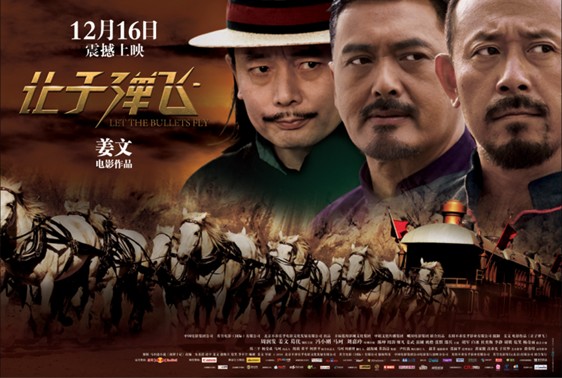
Set against the lawless landscape of 1920s Republican China, Let the Bullets Fly stands as a monumental work of political satire in Chinese cinema, blending explosive action with razor-sharp allegory. Set in 1920 during the warlord era, the film reflects the subversive spirit of Chinese folk wisdom—harmonizing carnivalesque humor with profound social critique while incorporating elements from traditional storytelling and modern absurdist theatre. Its narrative embodies the electric tension between authority and rebellion, deception and liberation.
Artistic brilliance ignites in the verbal duels between bandit Zhang Mazi and warlord Huang Silang, where every dialogue crackles with double meanings and metaphorical depth. The film’s visual language—from the stark monochrome opening to the fiery climax—transforms the fictional Goose Town into a microcosm of power struggle. Recurring motifs—the train, the silver coins, and the bullet-riddled trumpet—frame perspectives on greed, justice, and revolutionary irony. The structure unfolds like a layered folk legend, with plot twists echoing the traditional saying: “The mountains are high and the emperor is far away.”
More than an action comedy, Let the Bullets Fly represents a daring excavation of Chinese collective consciousness. It remains a testament to cinematic courage and cultural self-awareness, inviting audiences to witness a roaring fable where every gunshot satirizes corrupted power and every laugh celebrates the undying spirit of resistance in the Chinese psyche.