Heritage Grid | What Do You Do After Saving Your Empire? (If You're Jingtai, You Get Demoted)
Have you ever wondered how many imperial tombs the Ming Dynasty (1368-1644) left in Beijing? The immediate answer is thirteen, a world-famous heritage site. But there is actually a fourteenth one, hidden and often forgotten. This is the Jingtai Mausoleum, the resting place of the unlucky Emperor Jingtai (Zhu Qiyu,朱祁钰). Unlike his ancestors and descendants buried with grandeur in the Ming Tombs, his final abode is located at the foot of Yuquan Mountain in Haidian District. His tomb, neither fully imperial nor merely princely, stands as a silent stone witness to one of the most dramatic and heartbreaking chapters in Chinese history.
The Sudden Emperor: From Prince to Saviour of the Empire
Zhu Qiyu was never supposed to be the emperor. As the younger brother of Emperor Yingzong (Zhu Qizhen, 朱祁镇), his title was the Prince of Cheng. His fate changed overnight in 1449 due to a catastrophic military blunder known as the Tumubao Incident. Emperor Yingzong, led by a powerful eunuch, personally led a campaign against the Mongol Oirat tribe. The expedition ended in a complete disaster: the Ming army was annihilated, and the emperor himself was captured.
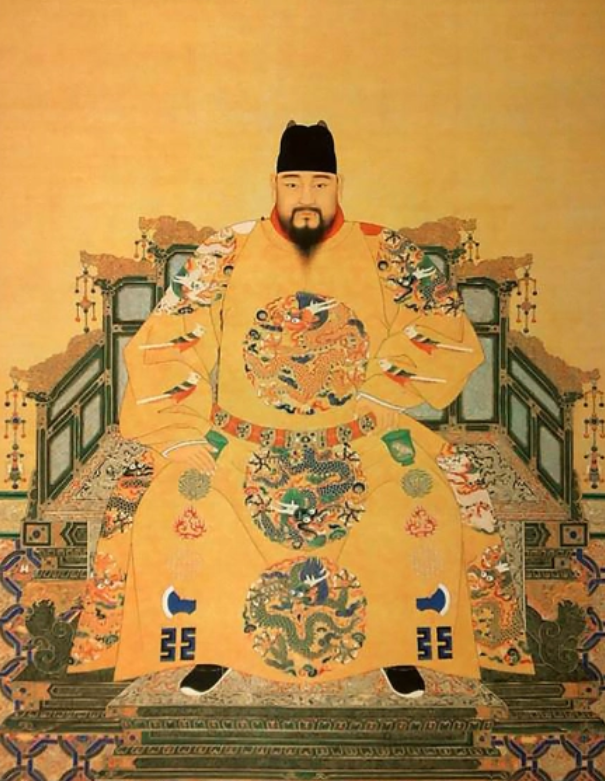
▲The portrait of Zhu Qiyu
With the Oirat army marching toward the undefended capital and the nation leaderless, panic swept the court. Some officials suggested fleeing south. At this critical moment, a resolute minister named Yu Qian(于谦)stepped forward, arguing that abandoning the capital would mean the end of the dynasty. He rallied support for decisive resistance and, crucially, proposed a solution: to install the Prince of Cheng as the new emperor to stabilize the nation.
Thus, the reluctant Prince Zhu Qiyu was elevated to the throne, becoming the Jingtai Emperor. He entrusted Yu Qian with the defense of Beijing. In a desperate and heroic battle, the Ming forces, under Yu Qian's command, successfully repelled the Oirat attack, saving the dynasty from collapse. For a few years, the Jingtai Emperor ruled this country effectively, bringing a period of stability and recovery to the shaken empire.
The Return of the Shadow and the Duomen Coup
However, the crisis was not over. A year later, the Oirats, finding the captured ex-emperor useless, released Zhu Qizhen. His return created an impossible political dilemma. The reigning Jingtai Emperor, fearful of losing his hard-won throne, greeted his brother coldly. Instead of a warm welcome, he placed the returned brother under house arrest in the Southern Palace, sealing the gates with locks filled with molten lead.

▲ The paiting scroll of Duomen Coup
For seven years, the shadow of the former emperor loomed over Jingtai's reign. The situation came to a head in early 1457 when the Jingtai Emperor fell seriously ill. Seizing this opportunity, a group of Yingzong's supporters, including the general Shi Heng and the scheming official Xu Youzhen, staged a daring pre-dawn coup known as the Seizing the Gate Coup or Duomen Coup. They broke into the Southern Palace, freed Yingzong, and escorted him to the main hall to reclaim the throne.
The coup was swift and successful. The sick Jingtai Emperor was deposed, demoted back to Prince of Cheng, and placed under even stricter confinement. He died just over a month later under mysterious circumstances, at the age of 30.
A Tomb of Contention: From the Perverse Prince to Imperial Mausoleum
The victors' vengeance extended beyond death. The restored Yingzong denied his brother all imperial honors. He was given the posthumous insult "Li"(戾) meaning "perverse" or "wayward," and buried not as an emperor but merely as a prince in a discarded concubine's cemetery west of Beijing. His original tomb, which he had started building for himself in the Ming Tombs area, was destroyed on Yingzong's orders.
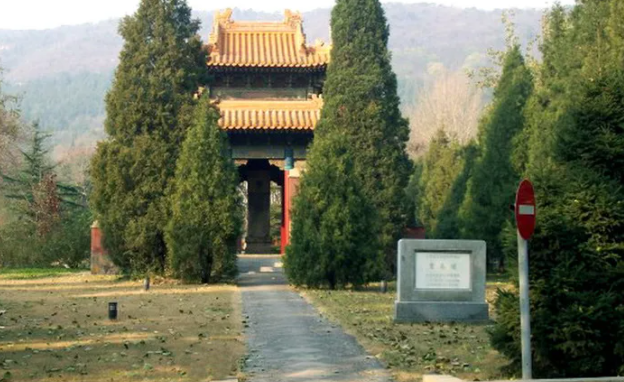
▲ The tomb of Jingtai Emperor
Yet, history has its own sense of justice. The new emperor's son, who ascended the throne as Emperor Xianzong, held a more balanced view. In 1475, he officially rehabilitated his uncle, restored his Jingtai reign title, and ordered his tomb to be upgraded to an imperial mausoleum.
However, the upgrade was incomplete, constrained by politics and the tomb's existing structure. This resulted in a unique architectural hybrid. Key features like a Stele Pavilion were added to the central axis, aligning with imperial protocol. Decades later, another emperor changed the roof tiles to imperial yellow, a final symbolic nod. Yet, it remained smaller, lacked the grand structures like a Soul Tower, and was geographically separated from the other Ming emperors. Thus, the Jingtai Mausoleum was frozen in a state between an emperor and a prince, a physical manifestation of its occupant's controversial legacy.
Related articles
-
 Heritage Grid | Xanadu and Khanbaliq: The Twin Jewels of China's Yuan Dynasty
More
-
Beijing’s Central Axis: a Living Link Between Past and Future
More
-
Heritage Grid | 600 Years of Human Genius Encoded in Beijing’s Forbidden City
More
-
The Olympic Legacy: Beijing’s Cultural Revolution through Sport
More
-
Heritage Grid | The Loyal Guardian: Yuan Chonghuan‘s Tomb and the She Family’s Century-Long Vigil
More
-
Heritage Grid | Decoding the Cosmic Architecture and Imperial Rituals of Beijing’s Temple of Heaven
More