Tang Poetry: The Golden Age of Chinese Verse
Emerging from the cosmopolitan Tang Dynasty, Tang poetry stands as the unparalleled pinnacle of Chinese literary achievement, blending lyrical elegance with profound emotional depth. Flourishing particularly during the 7th to 9th centuries, it reflects the refined Chinese aesthetic of harmonizing human sentiment with natural imagery while incorporating elements from music, painting, and philosophical contemplation. Its corpus embodies the perfect balance between formal precision and expressive freedom, personal emotion and universal resonance.
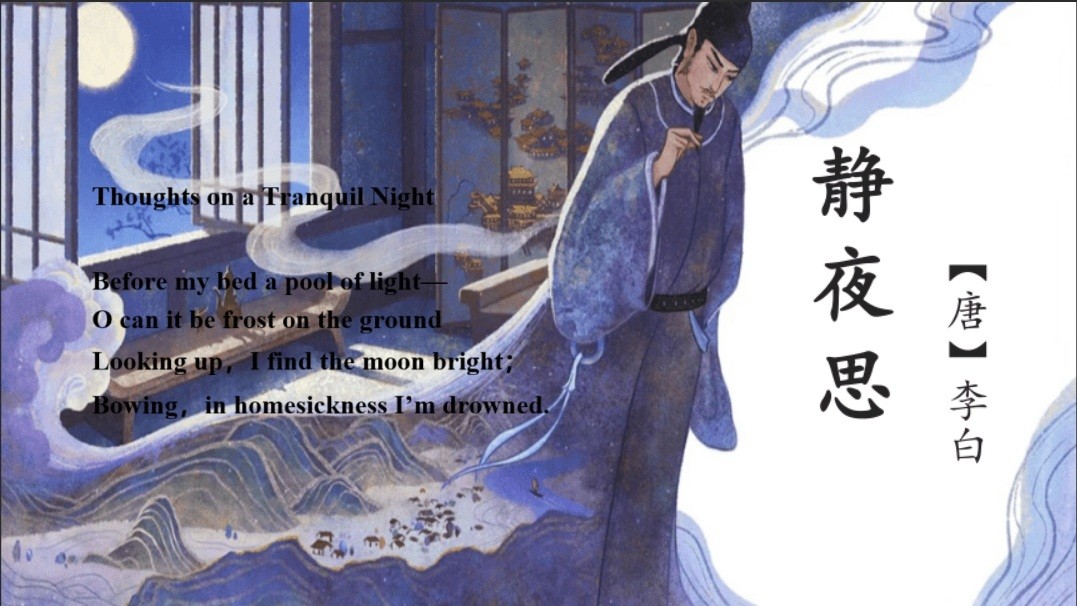
Poetic monuments include Li Bai’s Thoughts on a Tranquil Night(《静夜思》,jing ye si), where moonlight becomes a vessel for homesickness, and Du Fu’s Spring View(《春望》,chun wang), which transforms war-torn landscapes into meditations on collective sorrow. Wang Wei’s verses weave Buddhist tranquility with mountain and river scenes, while Bai Juyi’s narratives blend social concern with lyrical simplicity. The strict tonal patterns and parallel couplets of regulated verse demonstrate exquisite structural discipline, yet within these constraints bloom endless variations of emotional nuance. These poems follow an organic unity of scene and feeling, where every image—from falling petals to distant sails—carries metaphysical significance.
More than classical poetry, Tang verse represents the crystallized essence of Chinese cultural spirit. It remains a testament to civilization’s highest artistic aspirations, inviting readers to wander through gardens of verse where every line echoes with the splendor of Tang civilization and every character whispers tales of human experience transcending time and space.