Diaojiaolou: The Hanging Houses of Southwest China
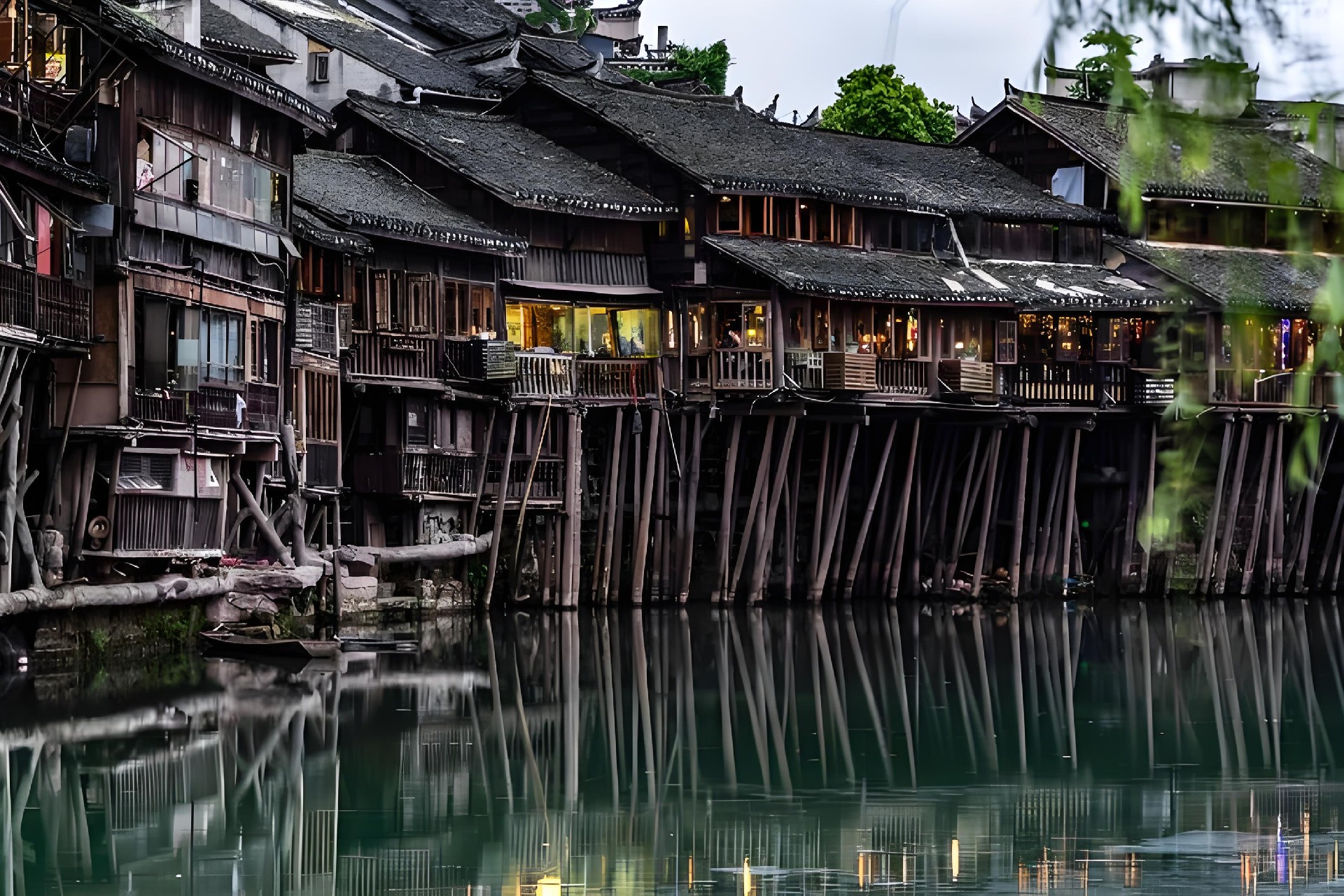
Tucked into the hills and valleys of southwestern China, stilt houses known as diaojiaolou (吊脚楼) are one of the most distinctive forms of traditional architecture in the country. Built by ethnic groups such as the Tujia, Miao, and Dong peoples, these wooden structures are constructed on slopes or over water, raised on stilts to level the floor on uneven terrain. The name literally means 'hanging foot building' — an apt description of the way the lower posts seem to dangle from the main body of the house.
The design of the diaojiaolou is both practical and elegant. The raised foundation allows air to circulate underneath, keeping the living space cool and dry in the humid mountain climate. It also protects against flooding, wild animals, and insects. The upper floors are used for living and sleeping, while the ground level beneath is often used for storing tools and firewood, or keeping livestock. The entire structure is built with traditional mortise-and-tenon joinery — no nails required.
The buildings are typically made from local fir or cedar wood, with tiled or thatched roofs and wooden balconies that wrap around the upper floors. These balconies, often decorated with carved railings, serve as outdoor living spaces where families gather, dry crops, and enjoy the mountain views. In some villages, rows of diaojiaolou cling to steep hillsides, their layered silhouettes reflected in the rivers below.
Today, many diaojiaolou villages are protected as cultural heritage sites and attract visitors from around the world. They stand as a testament to the ingenuity of China's ethnic minority peoples and their centuries-old skill in working with the landscape rather than against it.