Temple of Heaven: Art and Wisdom Under the Sky
The Temple of Heaven sits on the eastern side of the central axis of Beijing's outer city. Covering an area of about 4,000 mu (approximately 267 hectares), it is surrounded by two layers of red walls, giving it a grand and majestic presence.
This was once the sacred site where emperors of the Ming and Qing dynasties performed rituals to worship Heaven and pray for good harvests. Today, it is a UNESCO World Heritage Site, renowned for its unparalleled artistic and historical value.
The overall layout of the Temple of Heaven is divided into two groups of buildings—one in the south and one in the north—connected by a white stone pathway that stretches about 600 meters.
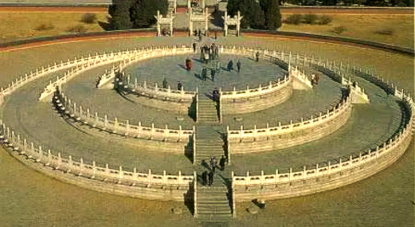
The main structure in the southern section is the Circular Mound Altar (Yuanqiu), where the emperor offered sacrifices to Heaven. Built entirely of white marble, it consists of three circular terraces, each surrounded by stone balustrades. The total number of balustrade panels is exactly 360, symbolizing the 360 degrees of the heavens. Every measurement and number used in the design of this altar is based on the "heavenly numbers"—1, 3, 5, 7, 9—or their multiples, reflecting the ancients' reverence and imagination toward the cosmos.
Adjacent to the Circular Mound Altar is a small round hall used to house the spirit tablets of the deities. But what makes this place truly famous is its Echo Wall—if you whisper softly against any point of the circular wall, your voice can be clearly heard at any other point along the wall, creating a remarkable acoustic effect.
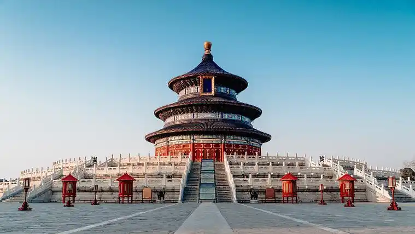
The most iconic building in the northern section is the Hall of Prayer for Good Harvests (Qiniandian). This is where the emperor prayed for bountiful crops. The hall is circular in shape, with three tiers of deep blue glazed tile roofs rising one above the other, topped with a gilded finial. Inside, there are 28 massive wooden pillars, with the four central ones known as the Dragon Well Pillars, symbolizing the four seasons. It stands atop a three-tiered circular stone platform, as grand as the Circular Mound Altar, yet even more exquisite in its craftsmanship.
From the Circular Mound Altar for worshiping Heaven, to the Hall of Prayer for Good Harvests, and the Imperial Vault of Heaven with its famous Echo Wall—the Temple of Heaven is not only a masterpiece of ancient Chinese architecture, but also a profound expression of how our ancestors looked up at the stars and revered the forces of nature.