The Chinese Brush: Form and Function
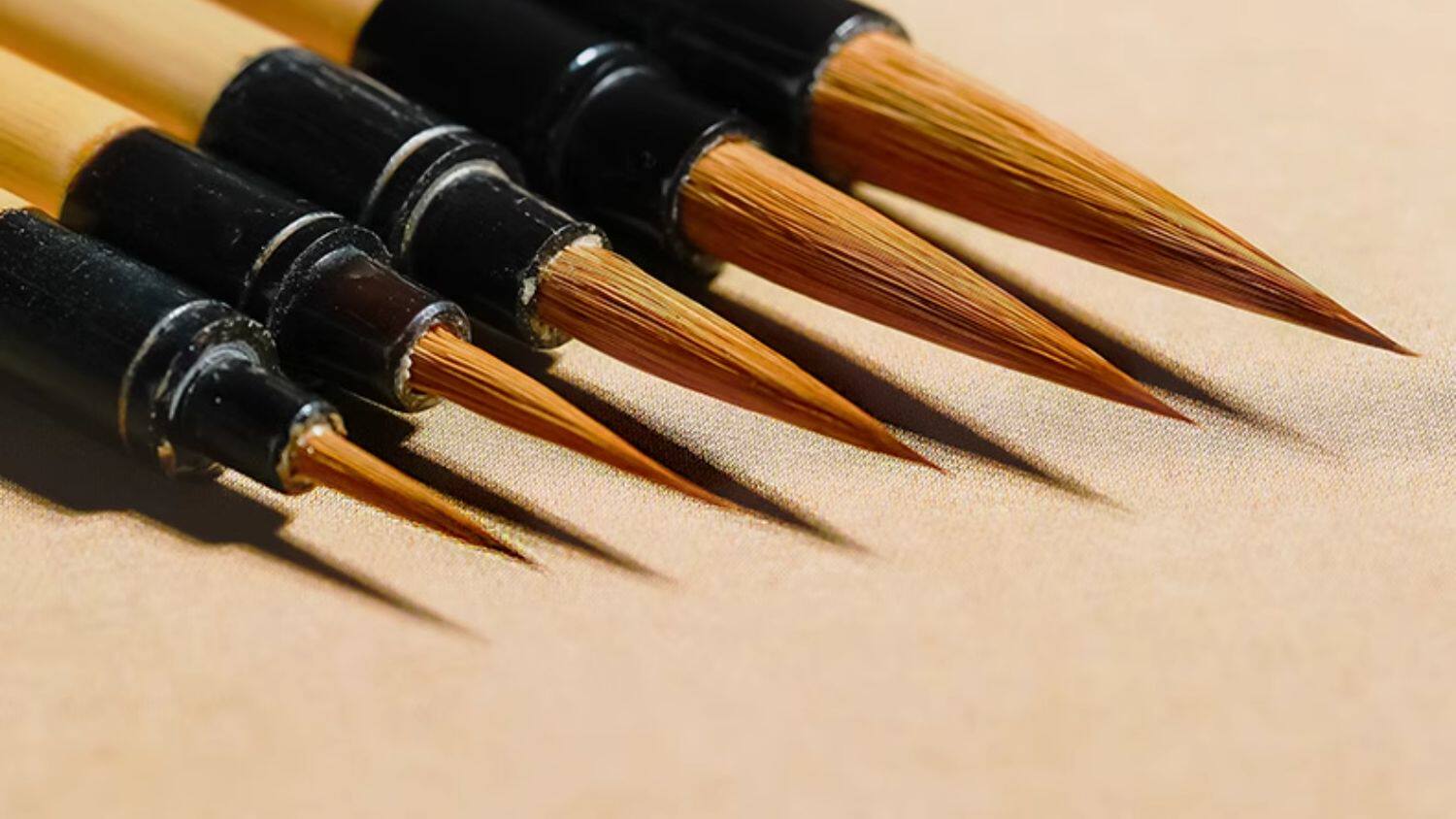
The Chinese writing brush, or maobi (毛笔), is one of the most important tools in Chinese calligraphy and painting. Its basic structure is simple: a handle made from bamboo, wood, or other materials, and a flexible tip formed from animal hair. Yet the quality of a brush depends on careful choices of length, softness, elasticity, and the way different hairs are arranged.
Brush hairs are commonly divided into three types. Soft brushes are often made from goat hair and can hold a large amount of ink, producing smooth and rounded strokes. Hard brushes, usually made from weasel or rabbit hair, are more elastic and suitable for sharp, controlled lines. Mixed-hair brushes combine soft and hard fibers, offering both ink capacity and strength. The tip should come to a fine point, open evenly when pressed, and return quickly to its original shape.
Choosing a brush depends on the style of writing and the experience of the user. Beginners often benefit from a medium-sized mixed-hair brush, which is easier to control. Large brushes are suitable for bold characters and expressive painting, while small brushes are used for detailed scripts and fine lines. Before use, a new brush is softened in clean water; after writing, it should be washed gently and hung with the tip downward.
More than a practical instrument, the brush responds directly to the movement of the hand, wrist, and breath. A slight change in pressure can turn a thin line into a broad stroke. For this reason, the Chinese brush is often described as an extension of the writer’s body and mind, transforming physical movement into rhythm, character, and emotion.