The Culture of Ink
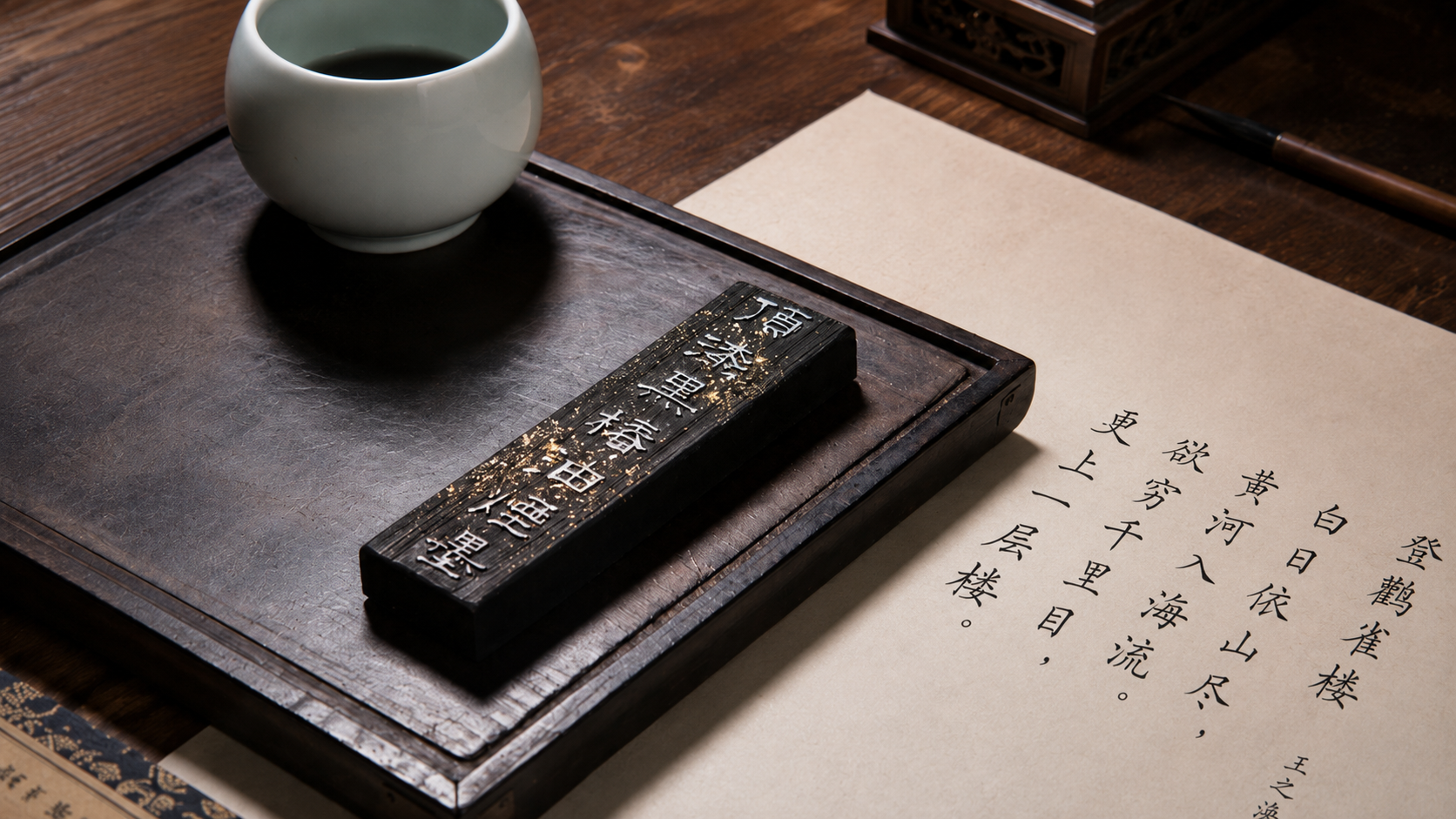
Ink, or mo (墨), has been central to Chinese writing and painting for more than two thousand years. Traditional Chinese ink is usually made in the form of a solid ink stick rather than a ready-to-use liquid. Before writing, the user slowly grinds the stick with water on an inkstone. This quiet process produces ink of the desired thickness and prepares both the material and the mind for creative work.
The main ingredients of traditional ink are soot and animal glue. Pine-soot ink is made by collecting soot from burning pinewood. It is valued for its deep, matte black and is especially suitable for calligraphy. Oil-soot ink is produced from the smoke of burned vegetable oils, such as tung oil. It often appears darker, smoother, and slightly glossy, making it popular for detailed painting and rich tonal effects. Craftsmen mix the soot with glue, knead the paste, press it into carved molds, and dry it slowly.
Fine ink sticks are often decorated with inscriptions, landscapes, dragons, or auspicious symbols. Some are made for daily use, while others are treasured as works of art. Famous ink-making centers, especially Huizhou in Anhui, developed highly refined techniques and produced ink prized by scholars, painters, and collectors.
In Chinese art, black ink is never simply one color. By changing the amount of water, an artist can create shades ranging from dense black to pale gray. These variations suggest distance, light, texture, and atmosphere. The phrase “ink has five colors” expresses this richness. Ink therefore represents both material craftsmanship and an artistic philosophy: with limited means, it can reveal an unlimited world.