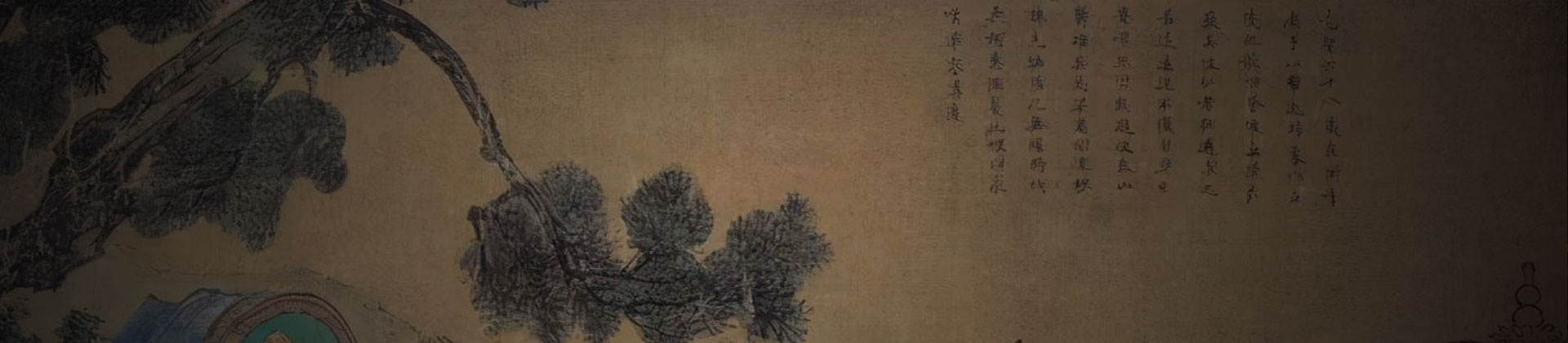
Mi Fu and the Expressive Art of Calligraphy

Mi Fu (1051–1107) was one of the most original calligraphers of the Northern Song dynasty. He was also a painter, poet, collector, and connoisseur who devoted much of his life to studying ancient masterpieces. Known for his independent personality and refined taste, Mi Fu became one of the Four Masters of the Song. His artistic career reflected the growing importance of scholar-artists, who valued personal expression as highly as technical skill.
Mi Fu studied earlier masters, especially Wang Xizhi and other calligraphers of the Jin and Tang dynasties, yet he did not merely copy them. He absorbed their methods and transformed them into a highly individual style. His running script is celebrated for quick changes of pressure, lively movement, and strong contrasts between heavy and light strokes. Characters seem to tilt, rise, and turn, but the overall composition remains controlled and energetic.
This dynamic quality is often described as the Mi style. Mi Fu wrote with a flexible wrist and varied the angle of his brush, creating lines that appear fresh and spontaneous. Works such as Poem Written in a Boat on the Wu River reveal his ability to unite literary feeling with visual rhythm. The movement of the writing echoes the emotion of the poem, making calligraphy an expressive art rather than simple handwriting.
Mi Fu’s influence continued long after his death. Later calligraphers admired his freedom, inventiveness, and deep knowledge of tradition. His work demonstrates a central ideal of Chinese literati art: true originality grows from careful study of the past. By combining discipline with personality, Mi Fu created calligraphy that remains vivid, elegant, and unmistakably his own.