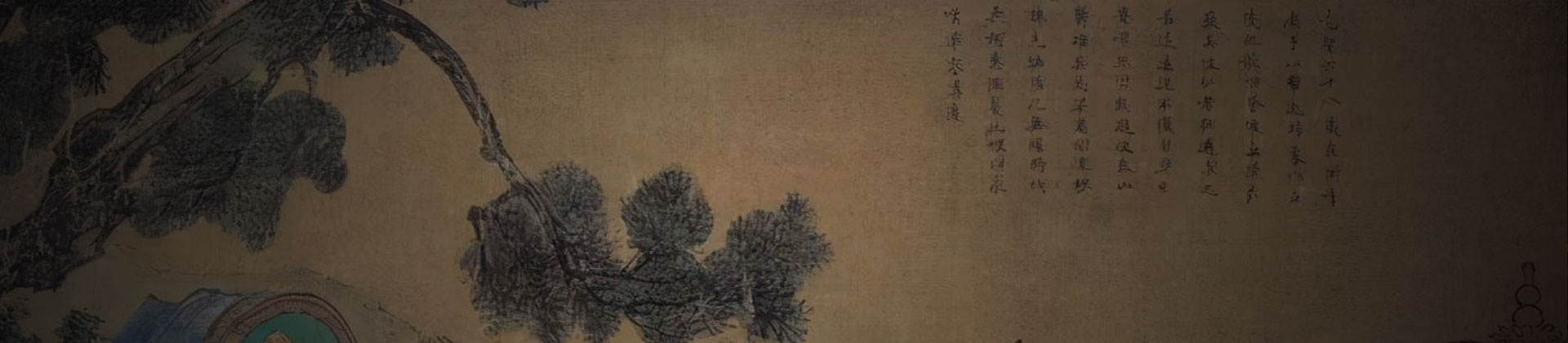
Ouyang Xun: A Master of Rigorous Regular Script

Ouyang Xun (557–641) was one of the most celebrated calligraphers of the early Tang Dynasty. Born during a period of political transition, he served in the Sui and Tang courts and became respected for both scholarship and calligraphy. His disciplined personality and careful study of earlier masters shaped a style that was precise, dignified, and highly influential. Among the great calligraphers of Chinese history, Ouyang Xun is especially remembered for perfecting a form of regular script later known as the Ou style.
The Ou style is admired for its strict structure and powerful balance. Each character is carefully organized, with clear proportions, firm verticals, controlled horizontals, and sharply defined turns. Although the strokes appear restrained, they contain strong inner energy. Ouyang Xun paid close attention to the relationship between individual strokes and the overall shape of a character, creating writing that is compact, upright, and stable without becoming stiff.
His best-known surviving work is the Stele of the Sweet Spring at the Jiucheng Palace, often regarded as a model of regular script. The inscription demonstrates his command of spacing, rhythm, and structural order. For generations, students have copied this stele to learn how to control the brush and construct balanced characters. His methods also influenced later calligraphers and became an important foundation for the teaching of regular script.
Ouyang Xun’s achievement lies not only in technical perfection but also in the moral spirit expressed through his writing. The clarity, discipline, and restraint of the Ou style reflect traditional ideals of self-cultivation and order. Even today, his calligraphy remains a standard for learners, showing how careful structure and controlled movement can produce both strength and elegance.