The Revival of Court Dance: Recreating the Tang Dynasty’s Rainbow Skirt and Feathered Coat
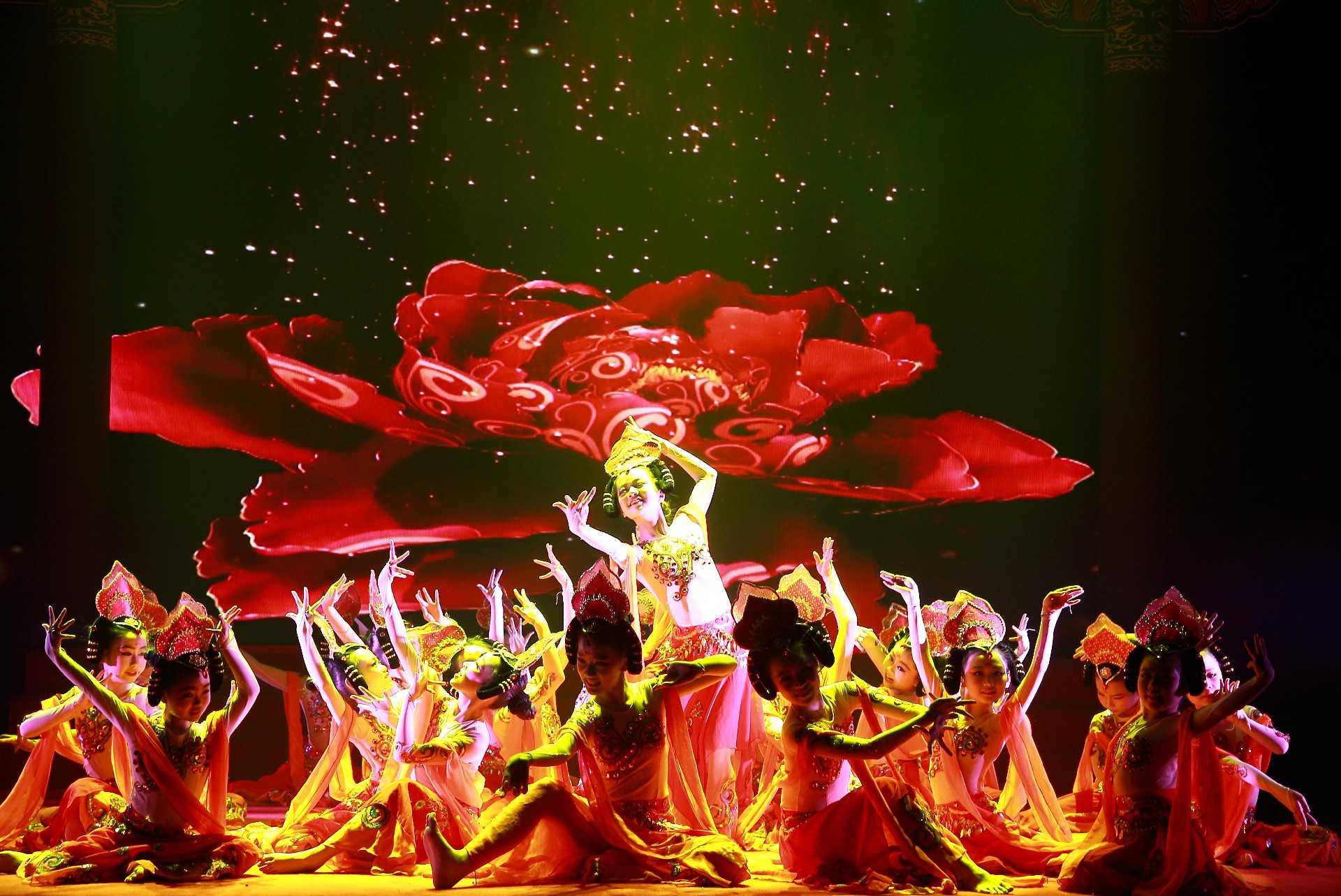
Imagine trying to reconstruct a lost Shakespearean play using only ancient scripts and paintings—this is the challenge faced by modern artists reviving China’s imperial court dances, like the legendary Rainbow Skirt and Feathered Coat (Nishang Yuyi Wu), a Tang Dynasty (618–907 CE) masterpiece. Once performed for emperors in grand palaces, these dances blended poetry, music, and elaborate costumes, much like European ballet’s fusion of art forms, but with uniquely Chinese aesthetics.
The Nishang Yuyi Wu, described in historical texts as a celestial dance with flowing sleeves and cloud-like movements, was lost for centuries. Today, researchers piece it together using Tang-era murals (like those in Dunhuang caves), surviving poetry, and even foreign accounts (such as Persian traders’ descriptions of Chinese court spectacles). Modern choreographers, akin to historical reenactors, experiment with reconstructed melodies on ancient instruments (e.g., the pipa lute) and design costumes based on unearthed silk fragments.
This revival mirrors global efforts to revive lost traditions—like how Renaissance Europe rediscovered Greco-Roman art. While debates persist over authenticity, these efforts offer a glimpse into the Tang Dynasty’s cosmopolitan vibrancy—a time when China’s capital, Chang’an, was the world’s most diverse city, much like today’s New York or London. Through such dances, the past dances again, bridging millennia for modern audiences.