Dolan Dance – A Folk Dance from Xinjiang
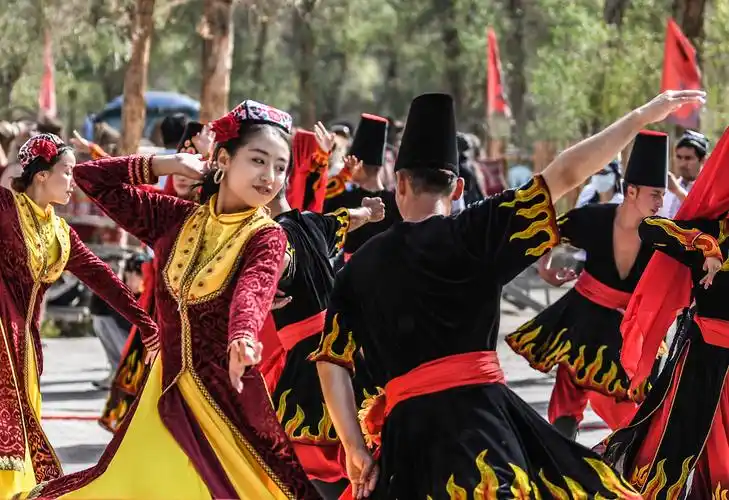
The Dolan Dance is a folk dance created by the people of Xinjiang through genrations of work and daily life. With a long history and a well-developed performance structure, it embodies the distinctive cultural traditions of Xinjiang while conveying joy, vitality and strength.
"Dolan" is an old place name. It means "groups and crowds". Long ago, this area had thick forests and many wild animals. The people traditionally set aside regular days for communal hunting. Upon returning from a successful hunt, they gathered together to dance. Over time, the Dolan people slowly created this dance with rugged movements and clear rhythms. The Dolan Dance mainly shows the process of hunting. Sometimes the movements are light and gentle, sometimes rugged and powerful. It shows both the joy of celebration and the tension of hunting.
The dance has a fixed order, with five parts. The first part is singing only, no dancing. The singer sings loudly to call people to get ready for hunting. The second part is a dance for two people, with walking steps as the main movement. The third part is still a dance for two, but they walk and spin at the same time. Dancers swing their arms left and right, and turn their bodies halfway. This shows hunters pushing aside thick bushes to look for prey. The fourth part has everyone standing in a circle. Women dancers raise one hand high, sometimes the right, sometimes the left, as if holding a torch to light the way for the men. Dancers make movements like drawing a bow to shoot, then rush forward to fight the prey. The fifth part has dancers spinning and moving forward in a circle. This shows a successful hunt. The dance becomes very lively and joyful. It also shows the understanding and love between men and women as they live and work together. The whole dance reaches its highest point here.