Sanam – Xinjiang's Beloved Improvisational Dance
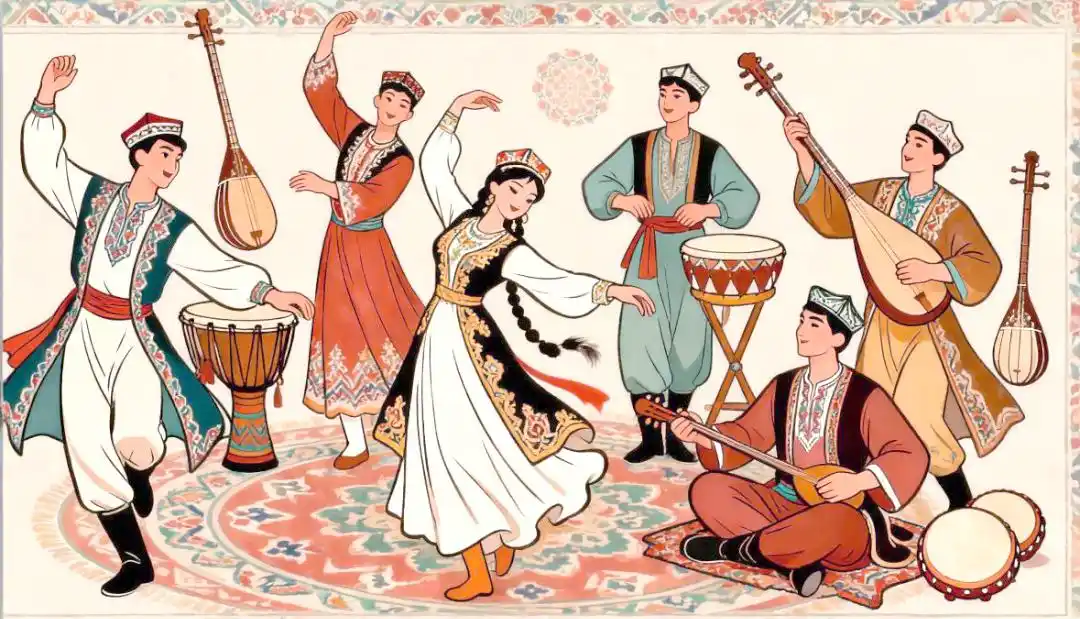
In Xinjiang, there is a particularly popular folk dance known as Sanam. It is a highly expressive participatory dance performed for enjoyment, distinguished by one unique feature: "the dancers do not sing, and the singers do not dance." While the dancers devote themselves entirely to their movements, the singing is provided by onlookers or accompanying musicians. This form of dance is widely practised throughout Xinjiang.
The greatest charm of Sanam lies in its freedom and spontaneity. There are no fixed routines or prescribed movements, allowing dancers to improvise according to their mood and the live music. It can be performed solo, in pairs, or in small groups. The music usually begins at a moderate tempo before gradually accelerating. As the performance reaches its climax, enthusiastic cheers and shouts erupt naturally from the crowd. Voices, drums, and applause blend together to create a vibrant atmosphere filled with joy and excitement.
The movements of Sanam are highly distinctive, placing particular emphasis on the graceful coordination of the head, shoulders, and wrists. The footwork is steady yet crisp and agile, giving the dancer both elegance and strength. The hand drum is the principal accompanying instrument, its bright, resonant beats adding warmth and energy to the performance.
Sanam occupies an important place in the lives of the Uyghur people, especially at weddings, where it is considered indispensable. On the evening of the wedding day, the groom and his friends go to the bride's home to escort her back for the wedding ceremony, dancing Sanam all the way in a joyful procession. At the wedding celebration, people of all ages gather in a large circle while the band plays nearby. Guests clap, sing, and dance together, filling the celebration with happiness and festivity.