
Hezhe Fish-Skin Clothing
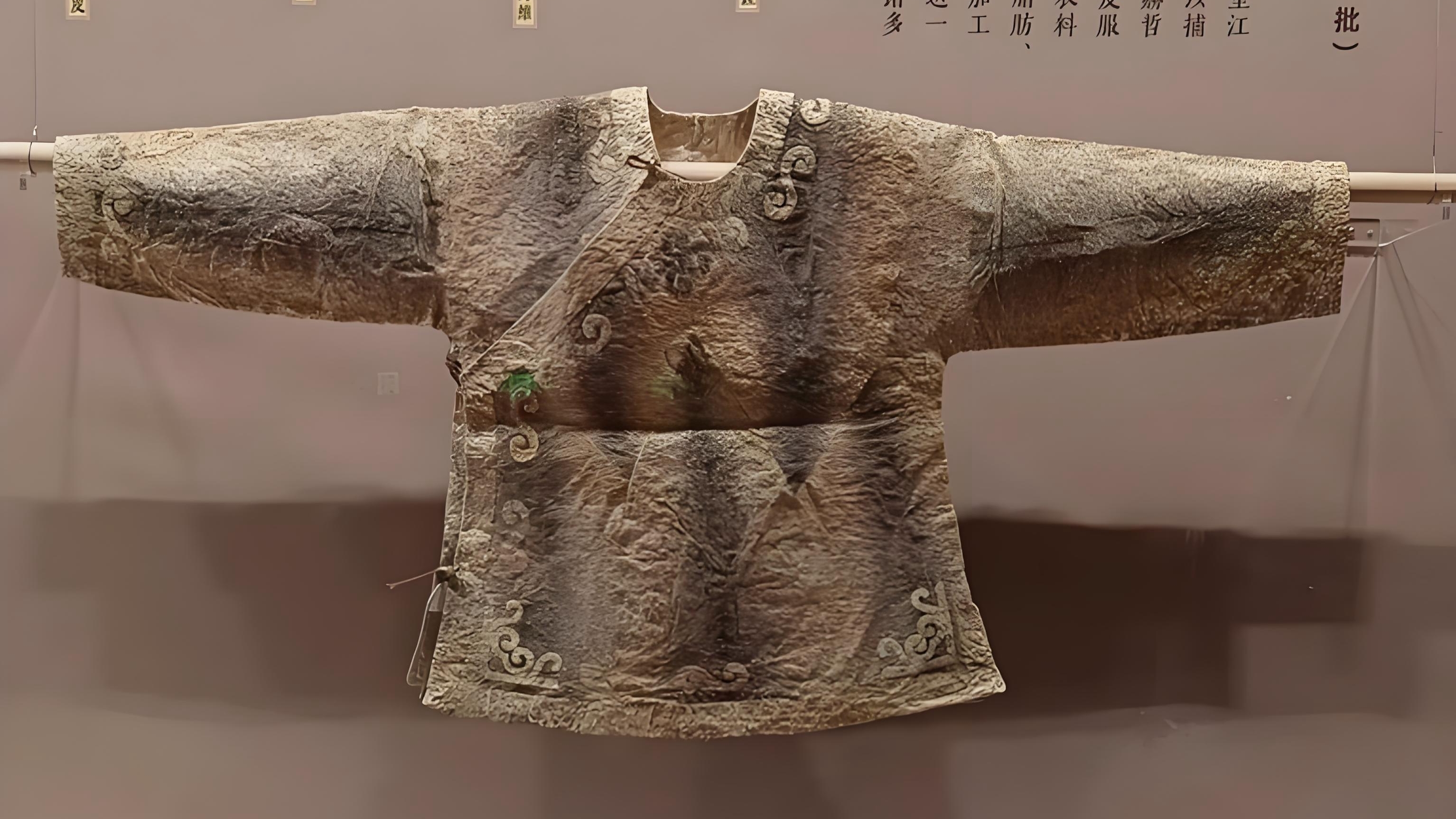
Along the banks of the Amur, Songhua, and Ussuri rivers in northeastern China lives the Hezhe people (赫哲族), one of China's smallest ethnic groups and traditionally a community of skilled fishers. For centuries, they relied on the rivers not only for food but also for clothing, developing a remarkable craft of making warm, durable garments from the skins of large fish such as salmon and catfish.
The process of creating fish-skin clothing (鱼皮衣) is labor-intensive and requires great skill. After fish are caught, their skins are carefully removed, cleaned, and dried in the open air. Craftspeople then soften the skins by repeatedly pounding and rubbing them, often with wooden mallets, until the material becomes soft, flexible, and almost like fine leather, ready to be cut, dyed, and sewn into finished garments.
Finished pieces, including robes, shoes, gloves, and bags, are often decorated with intricate patterns inspired by nature, such as waves, fish scales, clouds, and animal motifs, using natural dyes and fish-skin thread. These designs are not merely decorative; they also reflect the Hezhe people's deep spiritual connection to the rivers, the forests, and the animals that have long sustained their way of life.
Today, fish-skin clothing is rarely worn for daily life, but it survives as a treasured intangible cultural heritage, officially listed at the national level in China. Skilled artisans, mostly elderly women, continue to pass the craft to younger generations through workshops, museum exhibits, and cultural festivals, ensuring that this unique river-based tradition is not forgotten by the modern world.