The Great Heat: A Traditional Chinese Solar Term of Summer
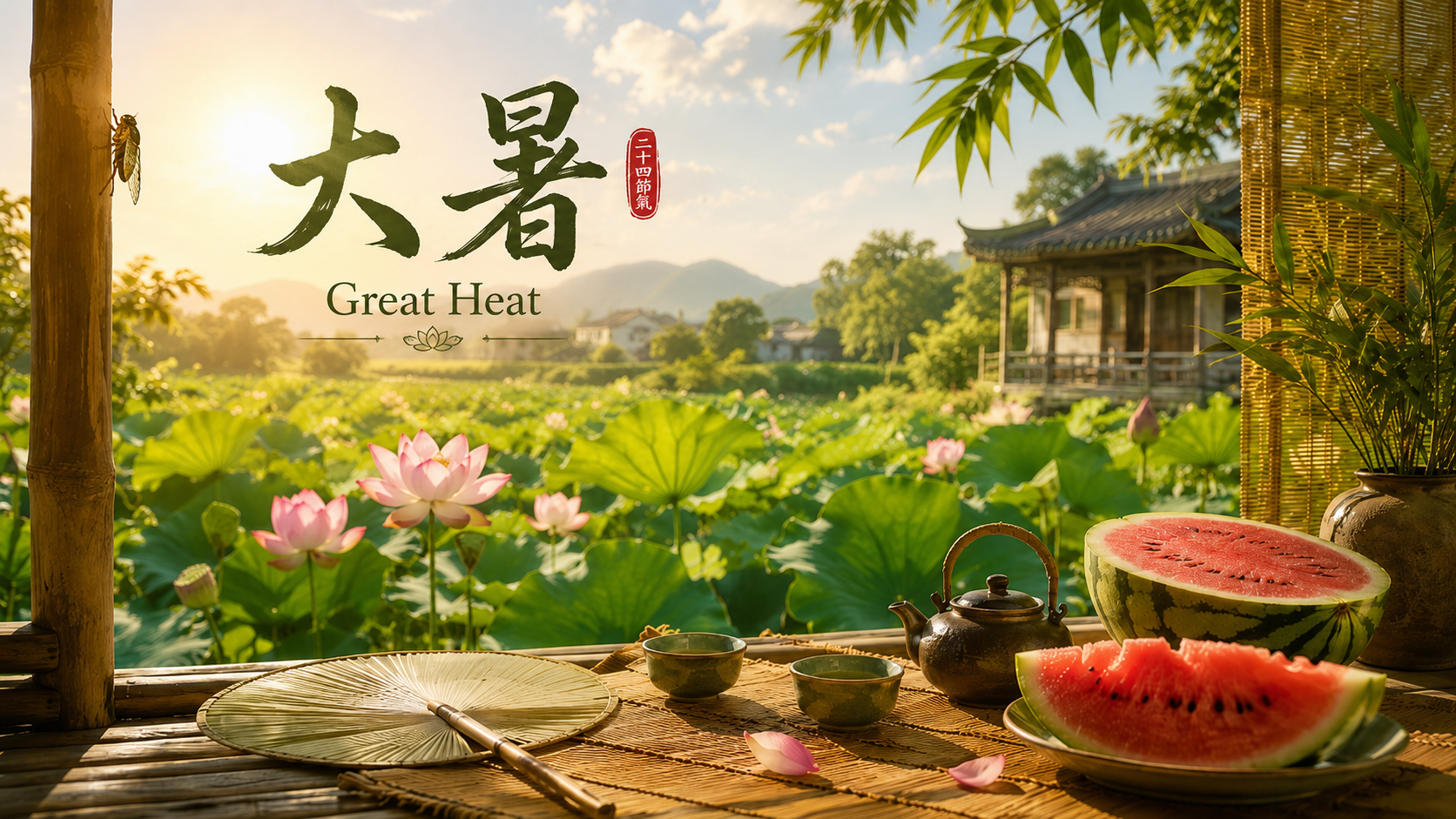
The Great Heat, known as Dashu in Chinese, is the twelfth solar term of the traditional Chinese calendar and usually falls around late July. As one of the hottest periods of the year, Dashu represents the peak of summer heat and the strongest vitality of nature. In ancient China, people observed changes in temperature, rainfall, and agricultural conditions during this period, developing seasonal customs and lifestyles that reflected their respect for the rhythms of nature.
Because the Great Heat occurs during an important stage of agricultural production, it has a close connection with farming activities. Farmers carefully monitored weather conditions because sufficient sunlight and rainfall were essential for crops to grow. Traditional Chinese people also developed ways to adapt to the intense heat, such as eating seasonal foods, drinking herbal teas, and adjusting daily routines.
The Great Heat is also associated with various regional customs. In many places, people enjoy seasonal fruits such as watermelon and lychee, prepare special dishes, and use local ingredients to welcome the summer season. Some coastal communities hold ceremonies to pray for safety and good harvests, showing the connection between folk traditions and local environments.
Beyond being a description of weather, the Great Heat represents the wisdom of Chinese seasonal culture. It reminds people to observe nature, adapt to seasonal changes, and appreciate the relationship between human life and the environment. Today, Dashu continues to be an important part of Chinese cultural heritage, connecting ancient knowledge with modern lifestyles.