Cold Food Festival and Green Rice Balls (Qingtuan)
The Cold Food Festival (Hanshi Jie) was once an important traditional folk festival in ancient China. It typically falls one or two days before the Qingming Festival (Tomb-Sweeping Day).
The origin of this festival is linked to a well-known and deeply moving story. During the Spring and Autumn period, Chong'er, the future Duke Wen of Jin, was on the verge of starvation in exile. His loyal follower, Jie Zitui, cut a piece of flesh from his own thigh and cooked it into a soup to save him. Nineteen years later, Chong'er returned to power and generously rewarded his loyal supporters, but he accidently overlooked Jie Zitui. Jie Zitui, indifferent to fame and fortune, retreated with his elderly mother into the remote Mianshan Mountain. When Duke Wen finally remembered him, he searched for him but could not find him. Acting on bad advice, he ordered the mountain to be set on fire from three sides to force Jie out. After three days and nights of fire, Jie Zitui was found embracing his mother, burned to death under a large willow tree.
Overwhelmed with grief, Duke Wen decreed that the day of Jie's death be observed as the Cold Food Festival. On that day each year, the entire nation was forbidden to light fire and could only eat food prepared in advance.
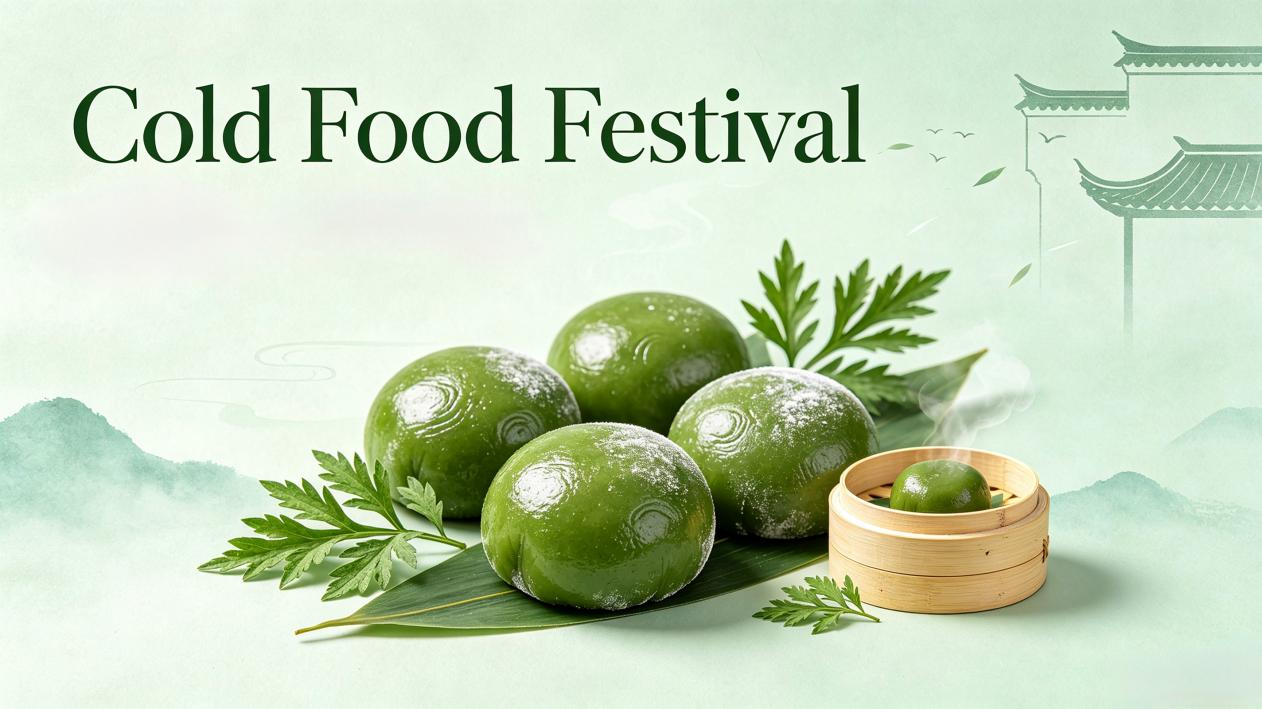
Since cooking was prohibited, people needed foods that could be eaten cold and kept well. Glutinous rice cakes proved to be an excellent choice, as they were filling, portable and easy to preserve.
Over time, people began to incorporate more of the spirit of spring into these cold rice cakes. As edible wild herbs emerged across the countryside, they were crushed into juice and mixed into glutinous rice flour.
This not only gave the cakes a vibrant green hue but also infused them with a unique herbal fragrance, along with certain nutritional and medicinal benefits.
Thus, the custom of eating these green rice cakes gradually became a lasting tradition of the Cold Food Festival.