Millet: The Forgotten King of Chinese Grains
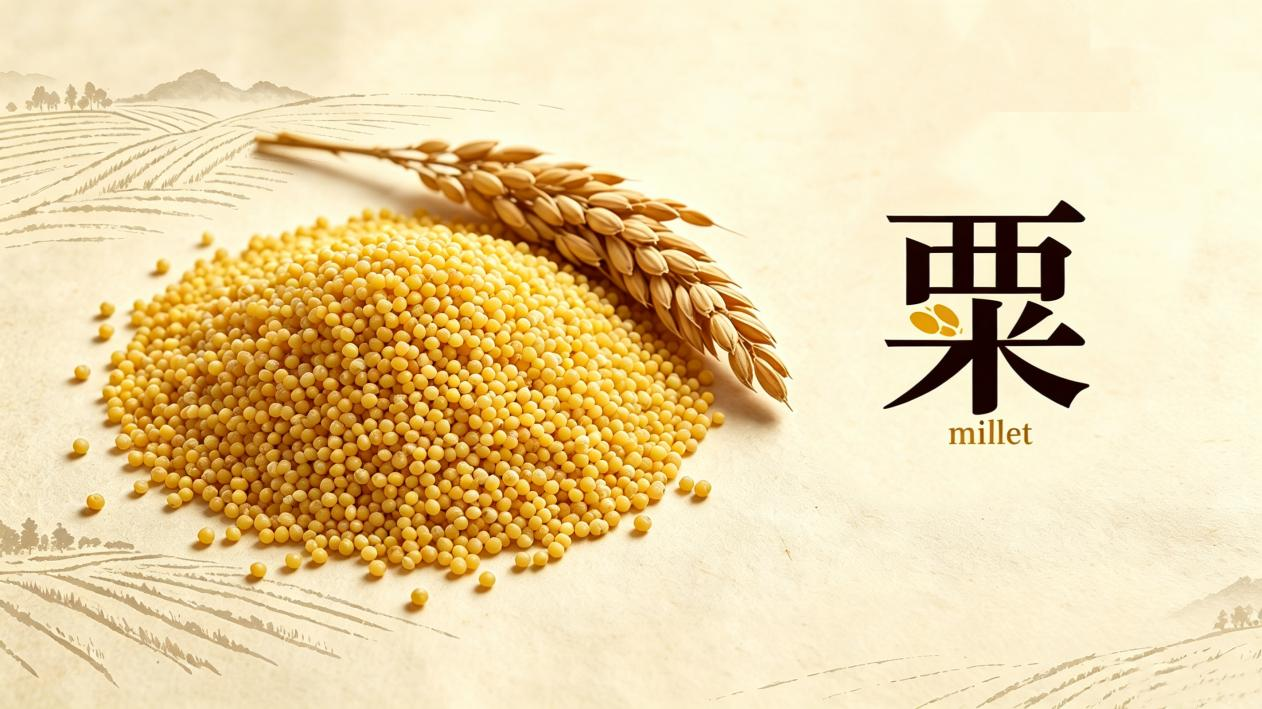
In ancient times, millet was called su(粟) or ji(稷)in Chinese, and in everyday speech it was commonly known as guzi (meaning grain). Before wheat rose to prominence, it was the most important food crop in northern China. Up until the middle of the Tang dynasty, it ranked first among China’s Five Grains.
China is the birthplace of millet. At the Cishan cultural site in Wu'an, Hebei Province, which dates back eight thousand years, traces of millet have been found.
In certain ancient periods, millet even became a symbol of China. For example, the Sanskrit word for millet is Cinake, while in Hindi it is Chena or Choen, and in Gujarati it is Chino — all of which are derived from the word for China.
The ancient Chinese called their country sheji (社稷). The character she(社) refers to the land, and ji(稷)refers to grain. Only with land can there be a state, and only with grain can the people be fed. The fact that millet was chosen to represent grain shows just how important it was and how deeply it mattered to the rise of Chinese civilisation.
Growing millet requires only about half as much water for irrigation as growing wheat. That made it especially suitable for the dry regions of northern China, particularly in higher areas like the Loess Plateau, the mountainous parts of western Henan, and the hilly zones along the lower Yellow River. And these areas happened to be the heartland of early Chinese civilisation before the Qin dynasty.
However, by the end of the Ming dynasty, the Four Great Crops from the Americas — corn, potatoes, sweet potatoes and peanuts — were introduced to China, and millet's status fell even further, almost to the level of a minor or coarse grain.