The Millennia-Long Journey of a Grain of Rice
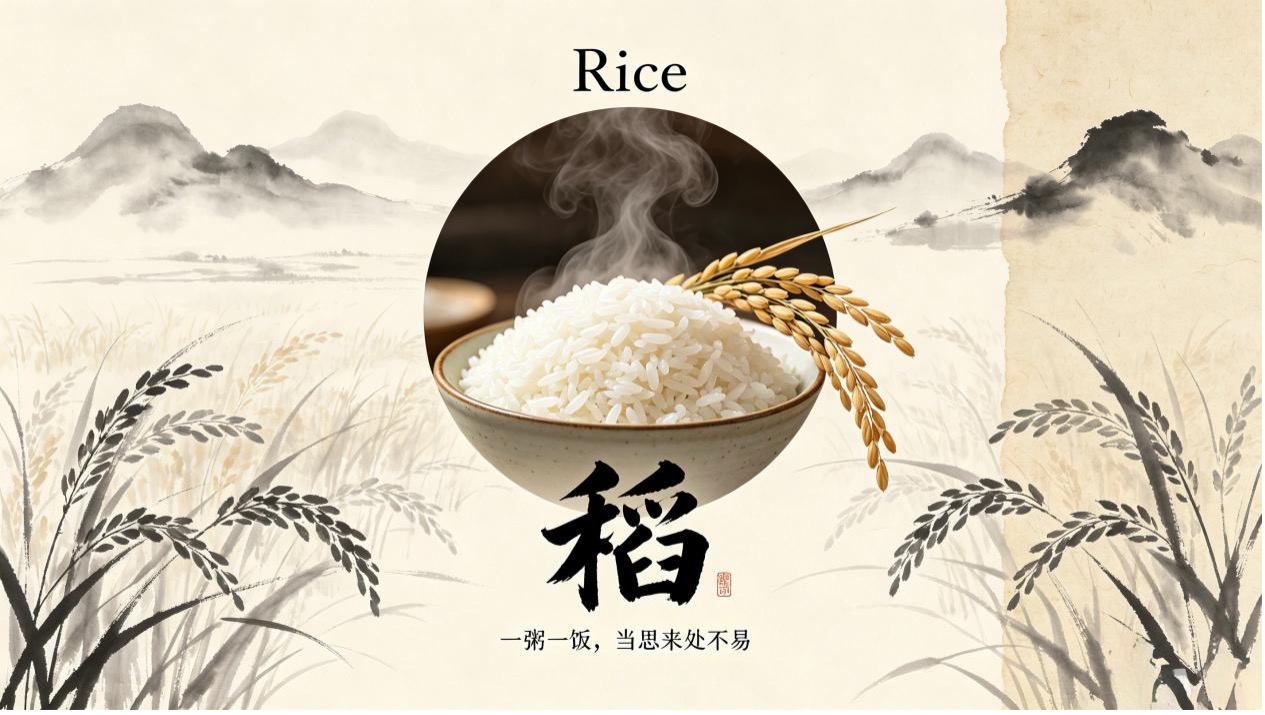
China was the first country in the world to domesticate and cultivate rice. Rice husks unearthed at the Shangshan site in Zhejiang Province date back over 8,000 years.
The earliest way to eat rice was by boiling it, similar to how we make porridge today. Due to the primitive processing tools at the time, people eating this kind of coarse porridge often had to chew through husks along with the grains. Later, as cooking vessels improved, steamed rice appeared.
Compared to porridge, steamed rice is like an operating system for meals. It can freely pair with a wide variety of other foods. For example, the nobles of the Zhou dynasty enjoyed pouring rich, savory meat sauce generously over their steamed rice.
Rice truly experienced its "breakthrough" during the Song dynasty. A new variety of rice was introduced from Vietnam. This strain had a much higher survival rate and led to a dramatic increase in rice yields. It became the backbone that enabled the Southern Song, despite being confined to a relatively small territory, to support a vast population.
According to data from the Food and Agriculture Organisation of the United Nations' Statistical Yearbook 2021, the top four global crops by production in 2021 were sugarcane (1.95 billion tons), corn (1.15 billion tons), wheat (766 million tons), and rice (755 million tons). Considering that sugarcane is not a staple food, and most corn production is used for animal feed and industrial processing rather than direct human consumption, rice—which originated in China—has become one of the most vital resources on the planet. Alongside wheat, it bears the heavy responsibility of sustaining human survival.