Yuping Xiao and Dizi Making Skills
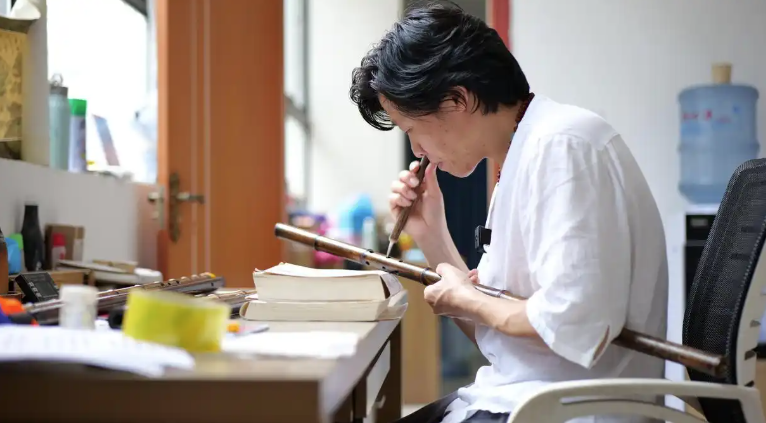
In the kingdom of musical instruments, few treasures can captivate both the ear and the eye. Yuping Xiao and Dizi, named after their place of origin—Yuping Dong Autonomous County in Guizhou—are such exceptional pieces. They are renowned traditional Chinese bamboo wind instruments, celebrated for their clear, melodious tones and exquisite carvings. As a crystallized product of cultural integration among the local Dong, Han, Miao, and Tujia ethnic groups, they bear significant historical, cultural, and artistic value.
Also known as Ping Xiao Yu Dizi and often decorated with dragon and phoenix patterns—hence the name Dragon Xiao and Phoenix Dizi—the Ping Xiao was first created during the Wanli period (1573–1619) of the Ming Dynasty, while the Yu Dizi originated in the fifth year of the Yongzheng reign (1727) of the Qing Dynasty. During the Ming and Qing dynasties, the musically accomplished Zheng family regarded the craft as a hereditary skill, and their products were once presented as imperial tribute. In the Xianfeng period of the Qing Dynasty, Zheng descendants began selling Ping Xiao commercially. Later, due to increasing demand, they started accepting apprentices and expanding production. The peak of production occurred in the 1980s and early 1990s, with annual output reaching over 500,000 pieces at its height. Yuping Xiao and Dizi were once listed among the Three Treasures of Guizhou alongside Moutai liquor and were often given as gifts or collectibles.
In 2006, the craft of making Yuping Xiao and Dizi was inscribed on China's first national list of intangible cultural heritage.
