Longquan Sword Forging: The Tradition of Iron and Fire
For many international readers, Longquan Sword may be an unfamiliar name. Yet, the forging craft behind it is an ancient art that has been sustained for over 2,500 years, offering a perfect gateway to understanding Chinese metalwork and its cultural spirit.
The essence of a Longquan Sword lies in its unique forging system. It is not made from a single piece of steel, but through a complex composite forging process. Artisans repeatedly heat, fold, and hammer together blocks of iron and steel with varying carbon content dozens of times. This process not only dramatically increases the blade's strength and resilience but also creates unique, natural patterns within the metal—resembling flowing water or pine needles—known as the blade pattern, a direct result of the material layering.
The final character of the sword is bestowed during the critical quenching stage. Artisans use the distinctively cold spring water from Qinxi Mountain in Longquan to instantly cool the red-hot blade. This drastic temperature change alters the metal's internal structure. Relying entirely on experience, the master controls this step with precision, determining the final balance of hardness and springiness in the blade, achieving the ideal state of being both rigid and flexible—razor-sharp yet resistant to breaking.
From selecting materials to the final polish, forging a traditional Longquan Sword involves more than 28 core steps—including hammering, filing, quenching, and polishing—each performed by hand, often spanning several months.
According to legend, Longquan’s swordmaking history traces back to master smith Ou Yezi from the Spring and Autumn period. This craft is more than weapon-making; it is woven into China's historical and cultural fabric. The sword has been a symbol of heroism and noble character, as well as an important ceremonial object.
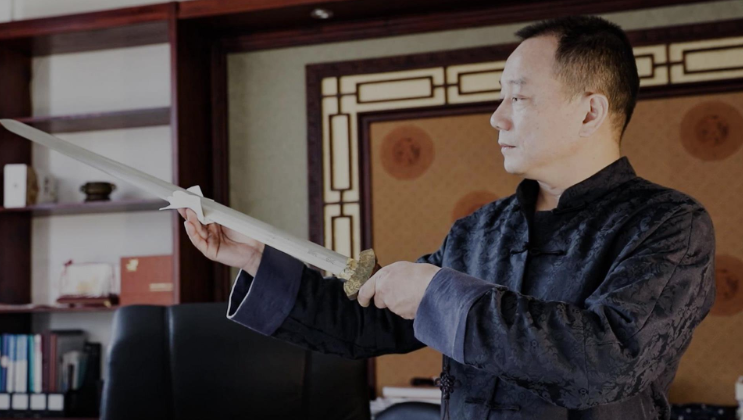
Today, this tradition is being innovatively sustained. Modern swordsmiths adhere to the core ancient methods while also creating works for contemporary appreciation, such as high-end art blades, props for film, and elegant tea knives. The Longquan Sword has transitioned from the historical stage to the realms of collection and cultural life, continuing to showcase the excellence and depth of Chinese hand-forging to the world.