Artisans Stitch Silken Dreams
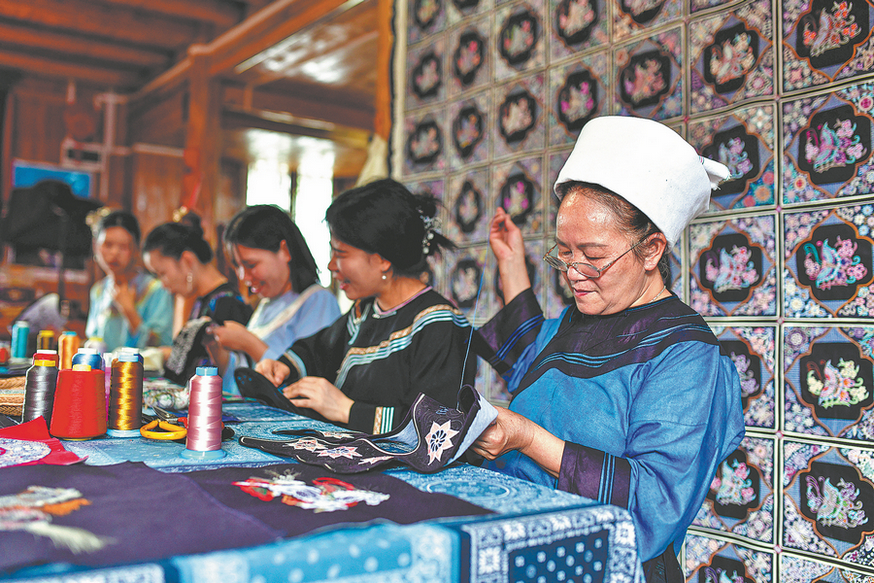
Wei (right) works alongside fellow embroiderers at the Sui Ethnic Horse-tail Embroidery Museum on May 19. YANG WENBIN/XINHUA
More than 1,000 years old, the Sui ethnic group's horse-tail embroidery remains one of China's most distinctive textile traditions. Practiced mainly in Sandu Sui autonomous county in Guizhou province, the craft involves wrapping silk thread around horsehair to create raised outlines before embroidering intricate patterns within them.
Celebrated for its technical complexity and artistic refinement, it is often described as the "living fossil" of Chinese embroidery. In 2006, it was included in China's first National Intangible Cultural Heritage List.
In recent years, Sandu has stepped up efforts to safeguard the tradition by establishing the Sui Culture Museum and training new generations of embroiderers. By combining traditional techniques with contemporary design and developing cultural and creative products, local artisans have brought the craft closer to modern consumers.
Today, affordable souvenirs and lifestyle products featuring horsetail embroidery have become popular with visitors, while exports have reached markets including Russia, France and the Czech Republic.
The growing industry now supports the livelihoods of more than 30,000 people, breathing new life into an ancient art through innovation while preserving its cultural roots.
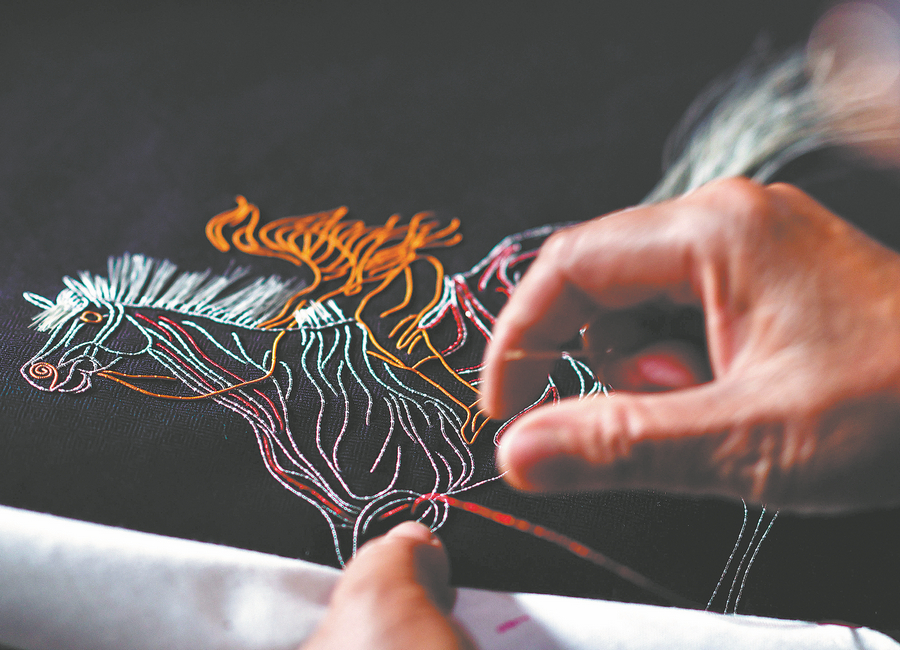
Wei stitches a horse-tail embroidery piece. YANG WENBIN/XINHUA
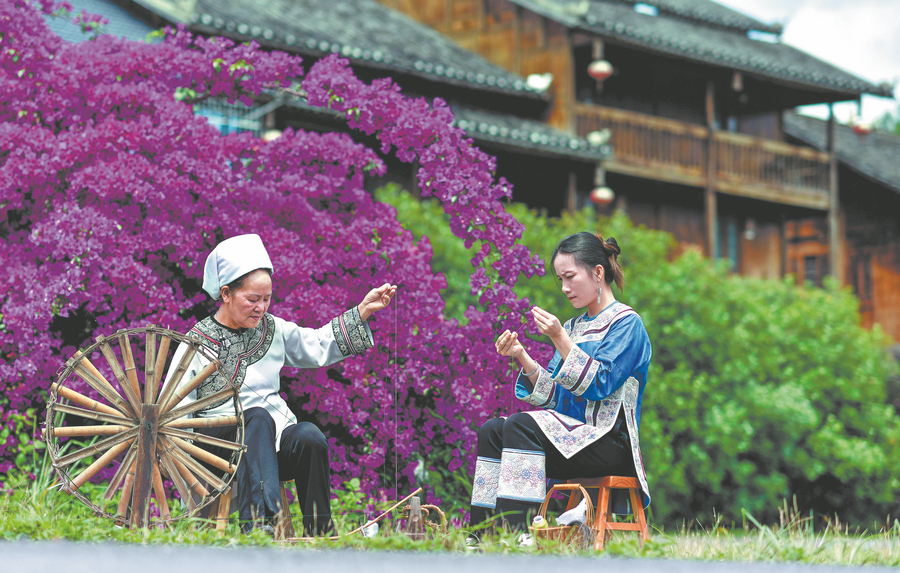
Wei Taohua (left), an inheritor of Sui horse-tail embroidery, prepares silk thread for embroidery at the Sui Ethnic Horse-tail Embroidery Museum in Sandu Sui autonomous county, Guizhou province, on May 20. YANG WENBIN/XINHUA
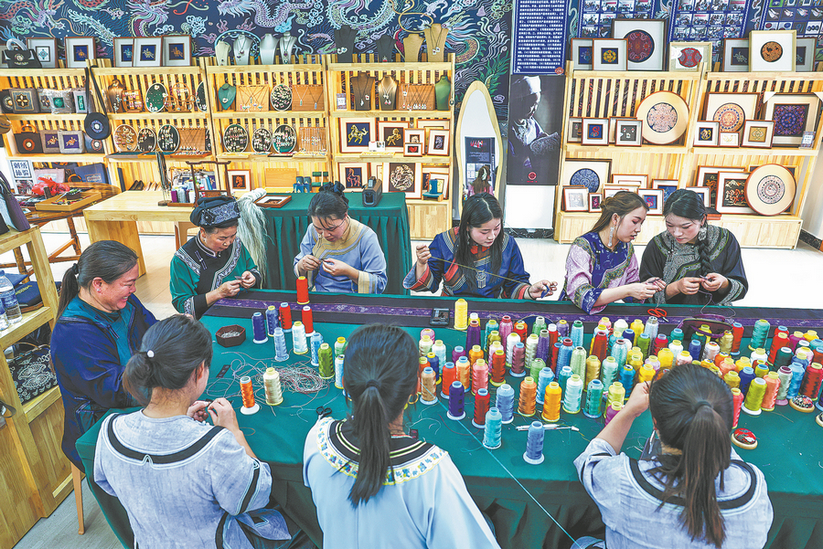
Embroiderers work at the Shuixian Horse-tail Embroidery Exhibition Hall in Sandu Sui autonomous county. YANG WENBIN/XINHUA