Letters and the Chinese Literati Tradition
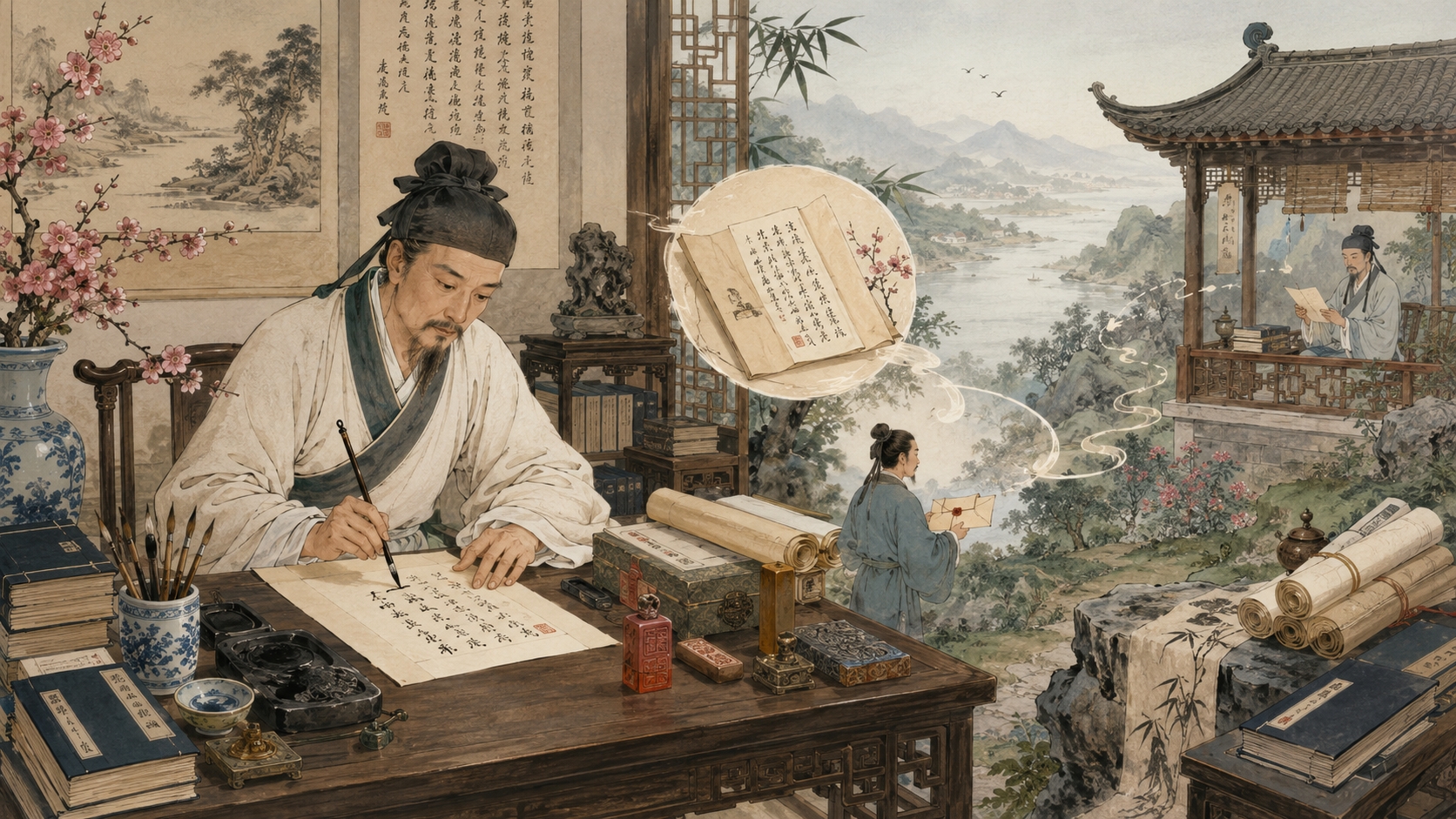
Letters have played an important role in Chinese literati culture for thousands of years. Beyond their practical function of communication, traditional letters were also regarded as a form of literary expression. Scholars used letters to exchange ideas, discuss literature, express emotions, and record personal experiences.
A well-written letter reflected the personality, education, and artistic taste of its author. Literati paid attention not only to content but also to language style, calligraphy, and emotional expression. Many historical letters became valued literary works because of their elegant language and sincere feelings.
Letters created connections among intellectual communities. Through correspondence, scholars from different regions shared academic opinions, discussed social issues, and exchanged artistic ideas, contributing to the development of Chinese literature and culture.
In traditional China, writing a letter was a meaningful cultural practice. The choice of words, rhythm of sentences, and handwriting all conveyed the writer’s character. Letters were not merely messages, but also a way for Chinese literati to present themselves and express their inner world.