Li Yu: The Last Ruler and the Immortal Poet
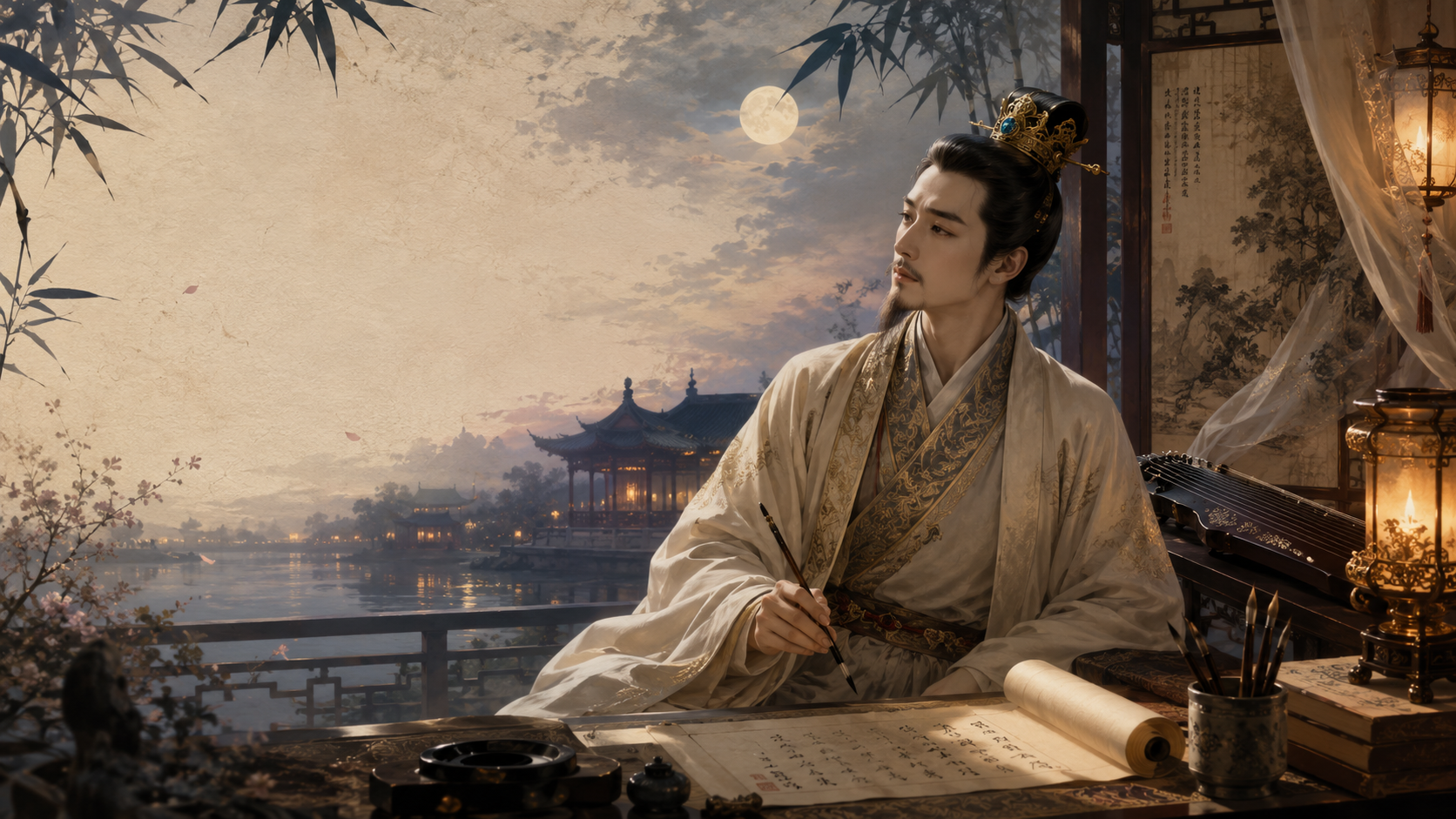
Li Yu (937–978), the last ruler of the Southern Tang, is remembered less for political achievement than for his extraordinary literary talent. He became ruler in 961, when his state was already under growing pressure from the Song dynasty. After the Southern Tang surrendered in 975, Li Yu was taken to the Song capital, where he lived as a captive nobleman until his death. His personal decline became the emotional foundation of his greatest poetry.
Li Yu’s lasting reputation rests on his ci poetry, a lyrical form originally connected with music. His early works often describe palace life, romance, beauty, and refined pleasure. After losing his kingdom, however, his writing changed profoundly. The later poems express grief, homesickness, loneliness, and helpless reflection, transforming private sorrow into language of remarkable clarity and emotional depth.
His style is admired for being direct, musical, and highly visual. Rather than relying on obscure allusions or excessive ornament, Li Yu often used familiar images—moonlight, spring water, fallen flowers, empty chambers, and distant rivers—to suggest memory and loss. Famous lines from poems such as “Yu Meiren” and “Langtaosha” have remained deeply moving because they connect personal experience with universal feelings of time, regret, and separation.
Although Li Yu failed as a monarch, he helped elevate ci from court entertainment into a major literary form capable of expressing complex inner life. Later poets admired his emotional honesty and natural language. His works occupy a unique place in Chinese literature, where the fall of a ruler became the beginning of an enduring poetic legacy.