Imagery in Classical Chinese Poetry: The Cultural Meanings of the Moon, Plum Blossoms, Bamboo, and Chrysanthemums
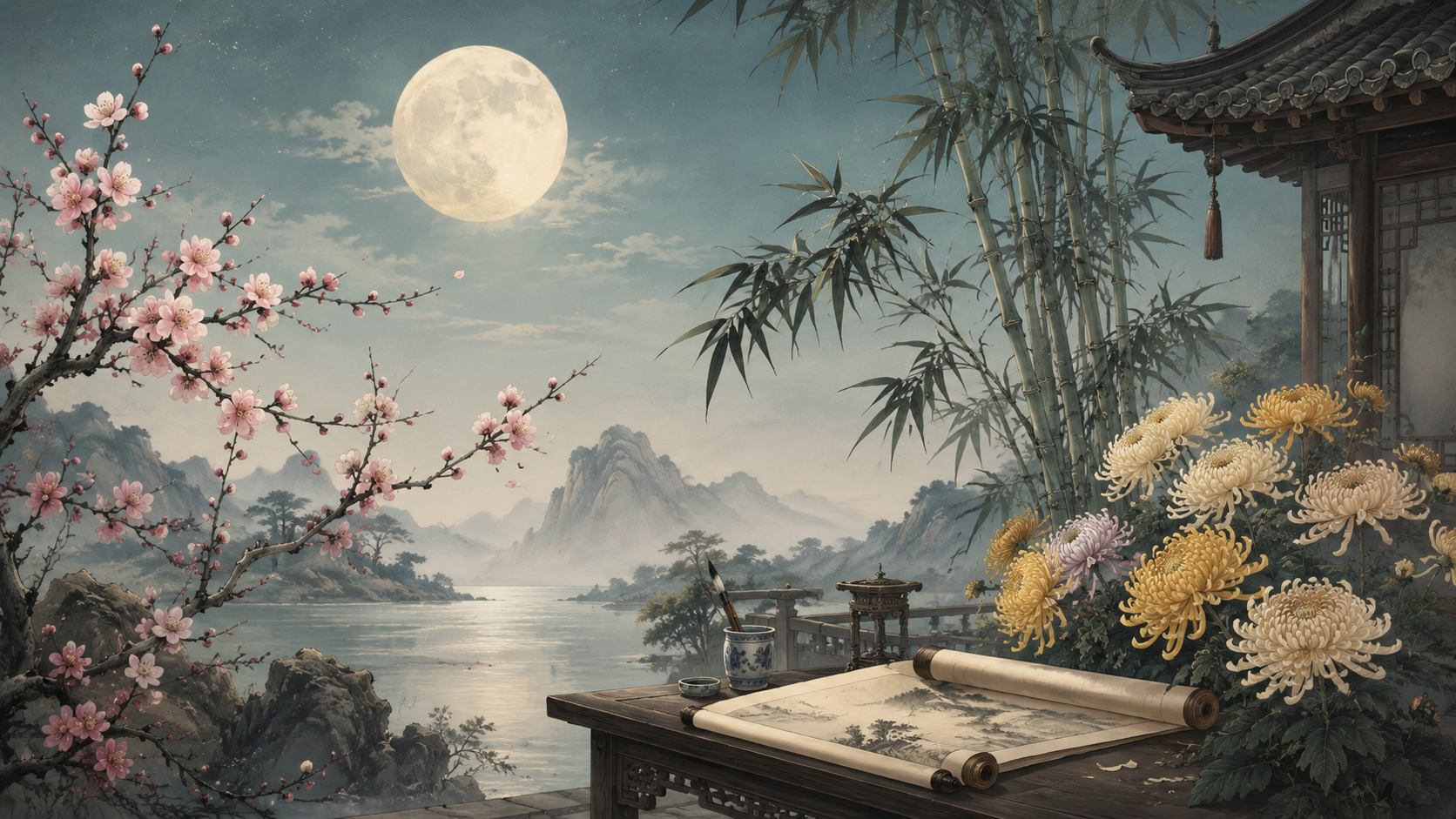
Classical Chinese poetry is renowned for its rich imagery, in which natural objects often carry meanings beyond their physical appearance. Mountains, rivers, flowers, and the moon are not only descriptions of the natural world but also expressions of human emotions, personal ideals, and philosophical reflections. Among these images, the moon, plum blossoms, bamboo, and chrysanthemums have become some of the most enduring symbols in Chinese literary tradition.
The moon is one of the most frequently used images in Chinese poetry. Because it appears above all people regardless of distance, it often represents homesickness, reunion, and longing for loved ones. Poets such as Li Bai used the moon to express personal emotions and reflections on life, turning a natural scene into a symbol of shared human feelings.
Plum blossoms, bamboo, and chrysanthemums also represent important cultural values. Plum blossoms symbolize resilience and hope because they bloom in the cold winter, while bamboo represents integrity, modesty, and perseverance through its straight and flexible form. Chrysanthemums are associated with elegance, independence, and a simple life close to nature, especially through the poetry of Tao Yuanming.
These traditional images have shaped Chinese aesthetics for centuries. Through poetry, painting, and calligraphy, the moon, plum blossoms, bamboo, and chrysanthemums have become visual and spiritual symbols that connect nature with human character. Their lasting popularity demonstrates how classical Chinese poetry transforms ordinary natural scenes into profound expressions of culture and philosophy.