Cao Cao - Viewing the Sea
Jian'an literature is a style of poetry that emerged during the late Eastern Han dynasty. It carried on the tradition of Han Yuefu folk songs and was primarily written in five-character lines, expressing the authors' thoughts and emotions with remarkable directness. These works not only reflected the realities of their time but also conveyed the scholars' aspirations to achieve great accomplishments and serve their country. From this period onward, writers shifted their focus from fu (rhyme-prose) to poetry, ushering in the first great flourishing of scholar-led poetic creation in Chinese literary history.
Cao Cao (155–220 AD) was not only the political leader of northern China during the late Eastern Han period but also the most influential literary figure of his time. His greatest literary achievements were in poetry.
Cao Cao's poems are rich in personal emotion. As a heroic figure who shaped the course of history during an age of turmoil, he wrote with a broad vision and grand themes. Rather than pursuing elaborate structure or ornate language, he favored a plain yet powerful style. A fine example is his famous poem Viewing the Sea.
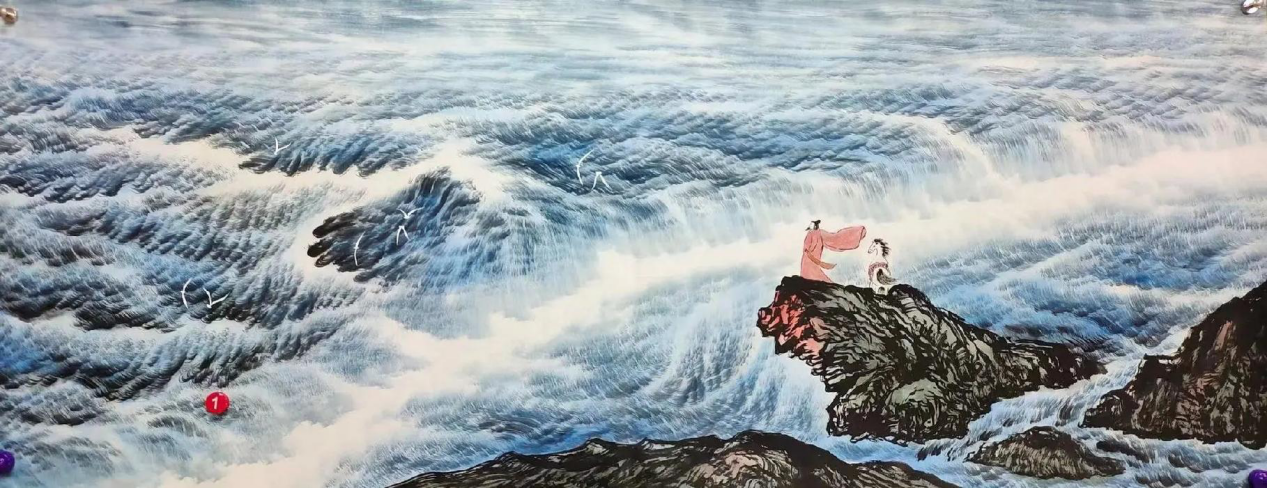
Widely regarded as the earliest complete surviving Chinese landscape poem, Viewing the Sea describes Cao Cao climbing Mount Jieshi and gazing out over the vast ocean. The sea, embracing the sun, the moon and all things beneath the heavens, reflects the poet's expansive vision and lofty spirit.
Earlier Yuefu poems often focused on the everyday experiences of ordinary people. Cao Cao's poetry, however, turned to the great events of an age marked by dynastic change. Blending realistic description with imaginative vision, he portrayed a society in turmoil with grandeur and emotional depth, transforming the traditional narrative style of Yuefu poetry.