Cao Zhi's Ode to the Luo River Goddess: A Love Story That Could Never Be
Cao Zhi was a son of Cao Cao, the king of the Wei Kingdom during the Three Kingdoms period. Brilliant and quick-witted, he was deeply favored by his father and was once considered a likely heir to the throne. However, his willful behavior and excessive drinking eventually caused him to fall out of favor.
Cao Zhi's writing inherited the lyrical tradition of the Han Dynasty while drawing on the romantic spirit of the Songs of Chu, opening up new possibilities for the development of fu poetry. Ode to the Luo River Goddess is one of his finest works in the genre.
In 221, after falling out of favor, Cao Zhi remained frustrated and disheartened. He turned to the mythical goddess of the Luo River, Fu Fei, to express the pent-up feelings in his heart.
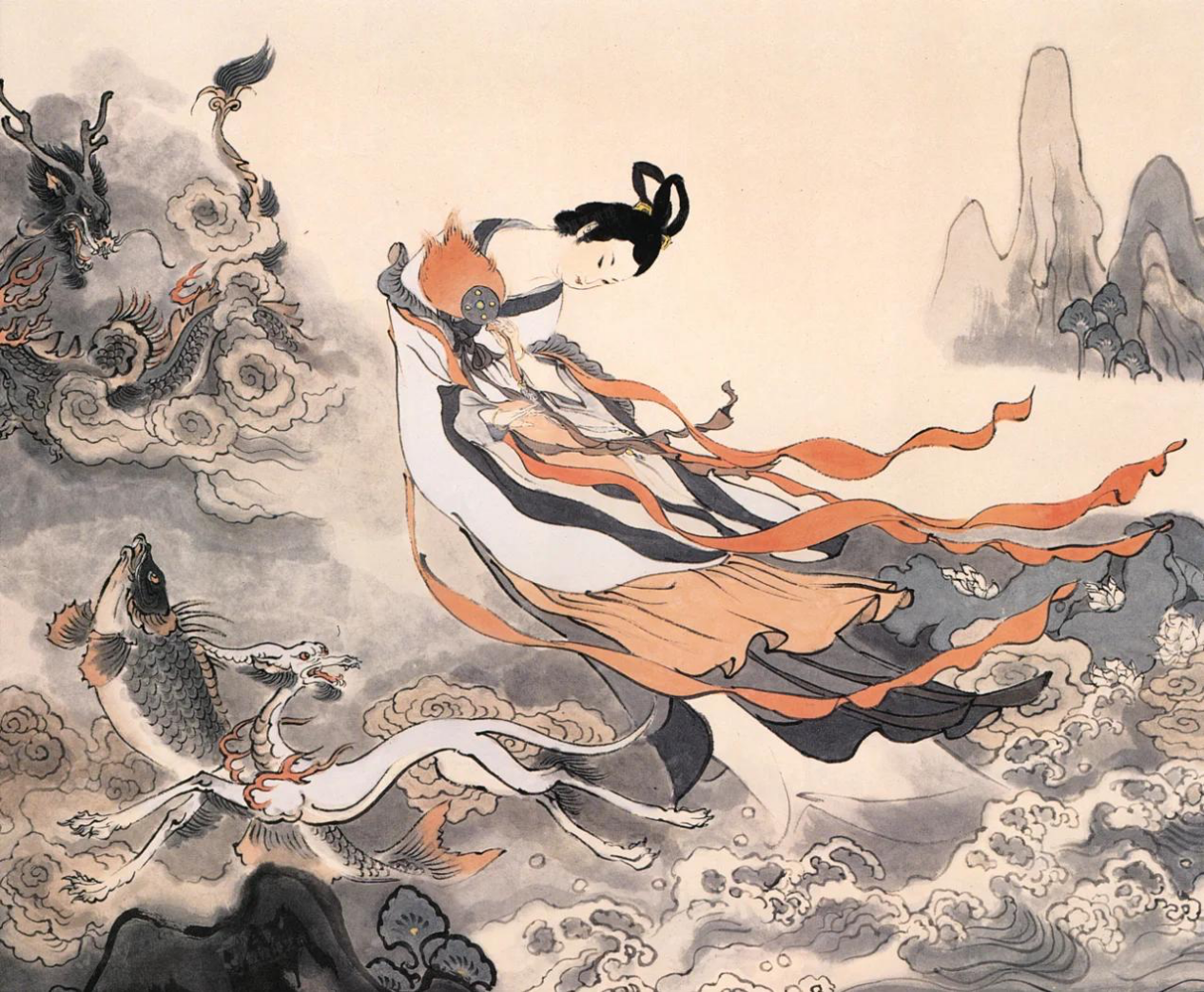
The fu imagines the author's encounter with the Luo River Goddess and the mutual longing and love that develops between them. The goddess is portrayed as breathtakingly beautiful, while the love between a mortal and a goddess is dreamlike and elusive. Yet because the two belong to different realms, they can never be united, leaving the author with profound sorrow and longing.
The work's emotional power comes mainly from two aspects: its unprecedentedly detailed portrayal of feminine beauty, and the sorrow of two beings who meet yet can never truly be together. Together, they convey a deeply human experience—the sense that perfection can be seen and desired, yet always remains beyond one's reach.
Ode to the Luo River Goddess has had a profound and lasting influence throughout Chinese history. During the Jin Dynasty, the renowned calligrapher Wang Xianzhi and the celebrated painter Gu Kaizhi both captured the spirit of the work in their art, creating exceptional masterpieces in the fields of calligraphy and painting. During the Southern Song, Yuan, and Ming periods, playwrights also adapted it for the stage. All this attests to the enduring artistic appeal of Cao Zhi's Ode to the Luo River Goddess.