Fujian Tulou: China’s Unique Earthen Apartment Buildings
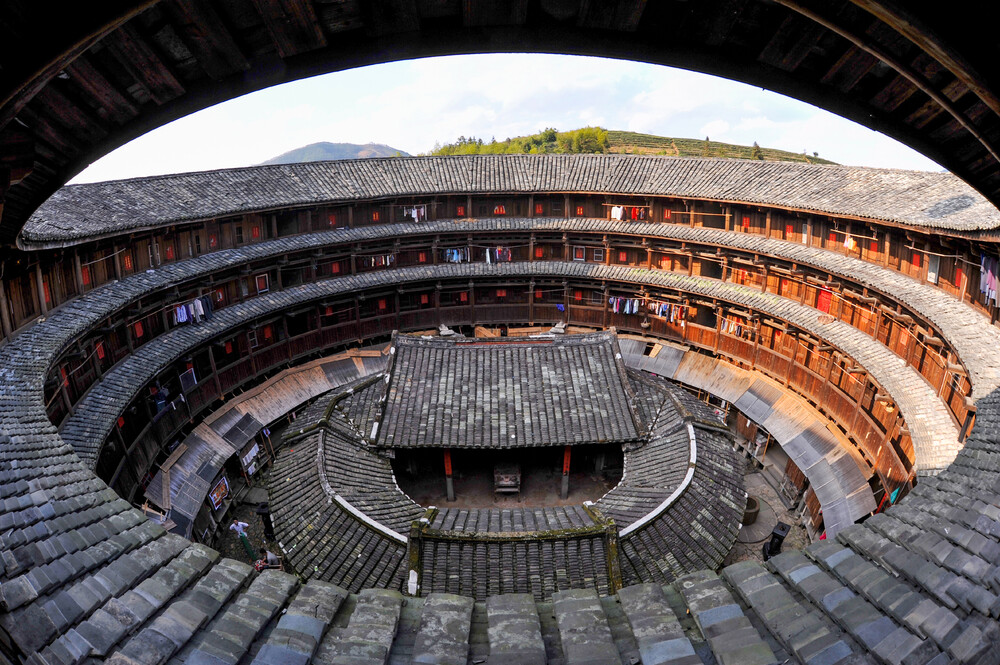
In the mountains of Fujian Province, you’ll find remarkable circular or square buildings called tulou (土楼), which literally means “earthen buildings.” These structures, built mainly by the Hakka people during the 12th–20th centuries, resemble fortified villages. Imagine a fortress-like apartment complex—some tulou house over 800 people in up to 80 rooms, all sharing communal spaces like kitchens and wells.
The design reflects both practicality and community spirit. The thick earthen walls (made of clay, stone, and wood) provide protection from bandits and harsh weather, while the central courtyard fosters social interaction, much like a European village square. It is now a UNESCO World Heritage.
For comparison, think of tulou as a mix between an ancient castle and a cooperative housing project. Unlike individual homes, they were designed for extended families to live together safely and harmoniously. Today, they attract visitors worldwide who marvel at their ingenuity, a testament to China’s rich regional architectural diversity.
Visiting a tulou offers a glimpse into how communities adapted to challenges, blending defense, functionality, and shared living, a concept universally relatable, even if the execution is uniquely Chinese.