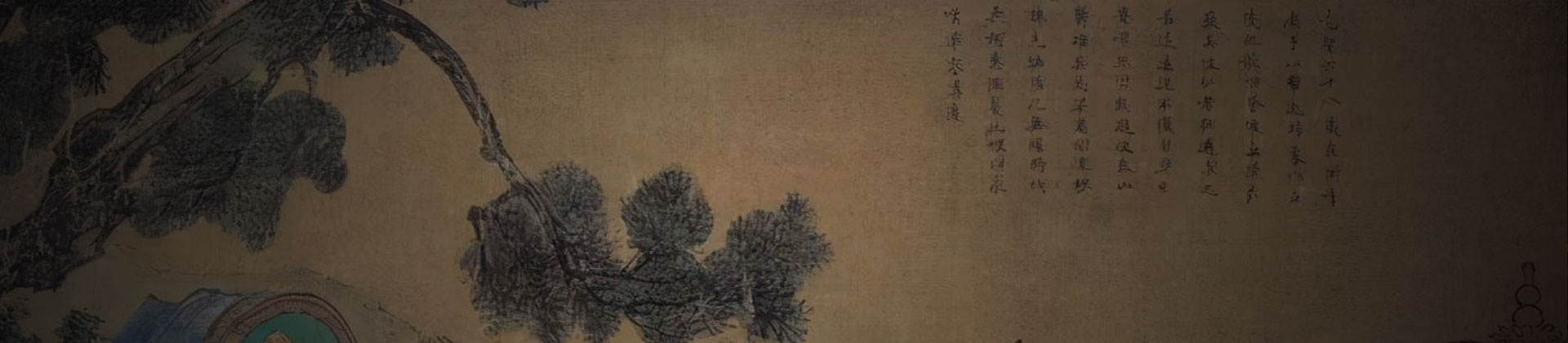
Sui Dynasty Manuscript: Zhangcao Script "Ode to the Expedition"

Zhangcao (ancient draft script) emerged in the Han Dynasty, evolving from simplified clerical script (Lishu). It is characterized by its rusticity. Unlike the cursive script commonly seen today, each character stands independently without connecting strokes. Zhangcao was popular for only a relatively brief period, and "Ode to the Expedition" stands out as one of its finest surviving masterpieces.
The text of the "Ode to the Expedition" was composed by Shi Xiaoshan of the Eastern Han Dynasty in praise of General Deng Zhi's achievements in suppressing the Qiang rebellion. This fourteen-line manuscript was executed with a worn brush in a fluent, archaic, and elegant style. Written on relatively thick paper, it has survived for more than a thousand years, yet its ink remains remarkably fresh—an exceptionally rare feat.
The scroll bears numerous seals, the earliest being a Sanskrit seal belonging to Princess Taiping of the Tang Dynasty, attesting to its great antiquity. In the early Southern Song Dynasty, the connoisseur Mi Youren identified "Ode to the Expedition" as a work of the Sui Dynasty. To this day, it remains one of the earliest surviving Zhangcao calligraphic work, giving it unique artistic value.
Originally part of the Qing imperial collection, the scroll passed into private hands during the Republican era. In 2003, the Palace Museum acquired it for 22 million RMB, bringing this monumental masterpiece of calligraphic history back to the Forbidden City.