The Zhongyuan Festival: Remembering the Departed
The Zhongyuan Festival (中元节), also known as the Ghost Festival or the Festival of the Fifteenth Day of the Seventh Lunar Month, is one of China’s most important traditions for honoring the dead. It is usually observed on the fifteenth day of the seventh lunar month, although some regions celebrate it on the fourteenth. The festival combines ancient ancestor worship with Taoist and Buddhist beliefs, especially the Taoist Zhongyuan rites and the Buddhist Ullambana tradition.
At the heart of the festival is remembrance. Families prepare food, fruit, incense, and paper offerings for deceased relatives. In some places, people visit ancestral graves, while in others they arrange offerings at home. These rituals express gratitude to earlier generations and strengthen the bond between the living and the dead. The festival is therefore not simply about ghosts; it is also about family memory, responsibility, and respect.
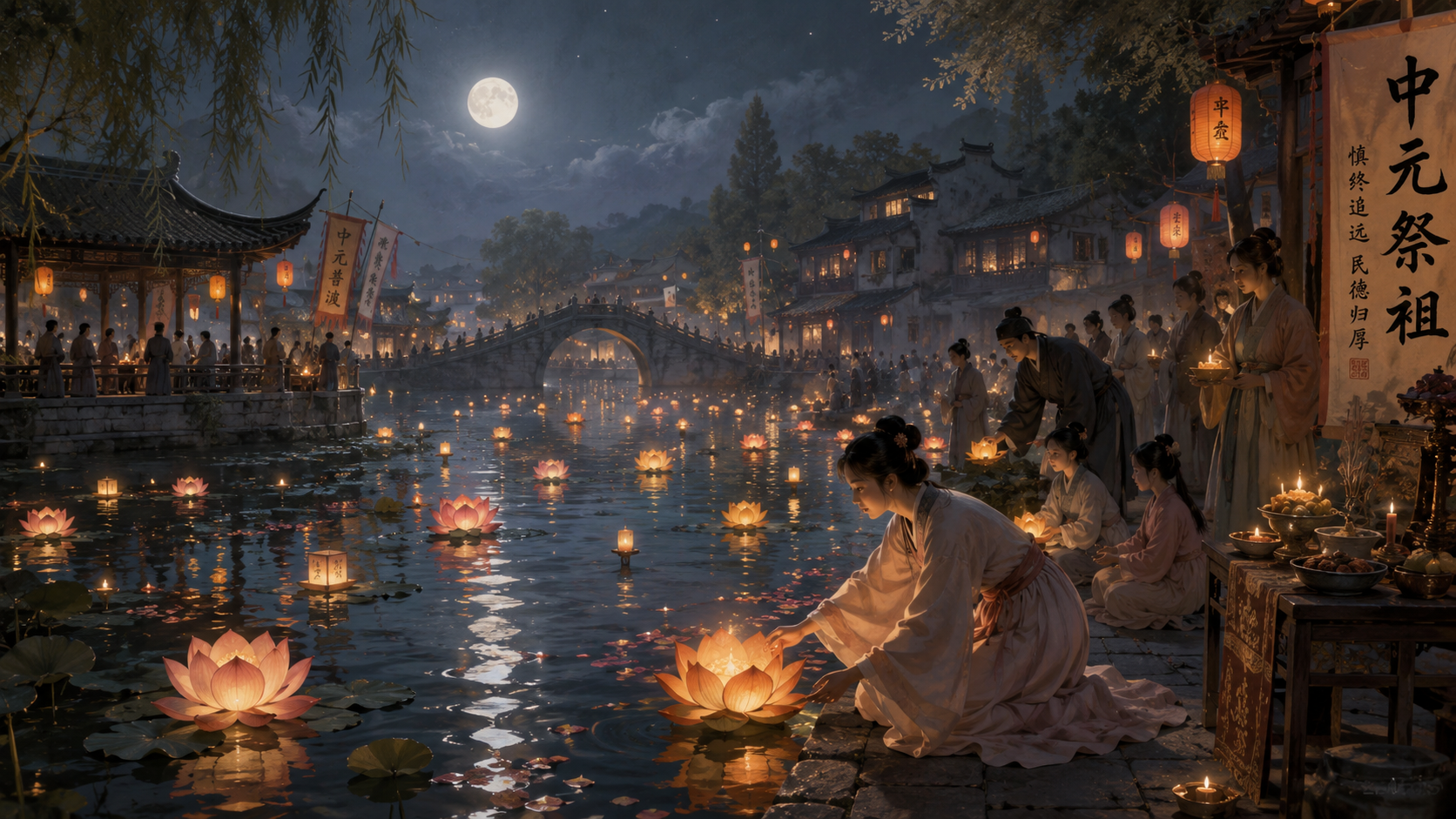
Regional customs give the festival a rich variety. In parts of Fujian and Taiwan, communities hold pudu ceremonies, offering food to wandering spirits. In Guangdong and Guangxi, many families observe the festival on the fourteenth day. Along rivers and lakes, people may release floating lanterns, whose soft lights are believed to guide spirits and carry prayers into the night. Opera performances and community feasts are also held in some areas.
Today, the Zhongyuan Festival remains a meaningful part of Chinese cultural life. Although some customs have become simpler, the central idea has not changed: people remember those who came before them and reflect on the continuity of family and community. Through incense, food, lanterns, and quiet remembrance, the festival transforms grief into respect and keeps personal memory connected with a much older cultural tradition.