Chopsticks: A Symbol of Chinese Food Culture
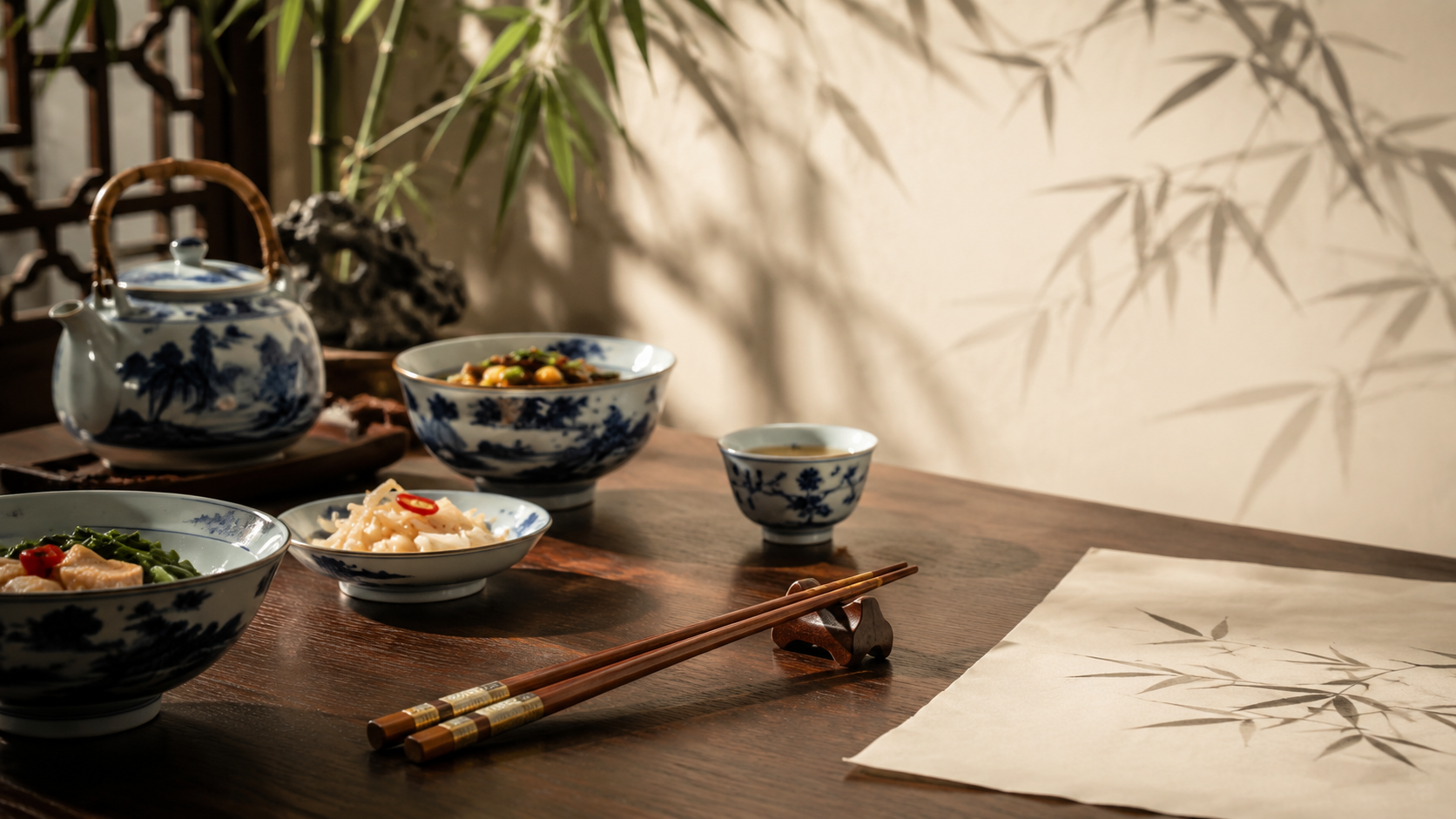
Chopsticks are one of the most recognizable symbols of Chinese food culture and have been used in China for thousands of years. As a simple pair of wooden or bamboo sticks, chopsticks reflect the wisdom of ancient Chinese people in daily life. Archaeological evidence shows that early forms of chopsticks appeared more than two thousand years ago, and they gradually developed from cooking tools into essential tableware. Over time, chopsticks spread throughout East Asia and became an important part of regional food traditions.
The design of chopsticks appears simple but contains practical wisdom. Unlike knives and forks, chopsticks allow people to pick up, separate, and taste food with delicate movements. The two sticks must work together through balance and coordination, requiring both skill and patience. Materials used to make chopsticks have changed over history, including bamboo, wood, bronze, ivory, porcelain, and metal. Decorative patterns often express wishes for happiness, longevity, and prosperity.
Beyond their practical function, chopsticks carry rich cultural meanings. In Chinese society, the relationship between two chopsticks is often seen as a symbol of harmony and cooperation. Sharing meals with chopsticks around a family table represents connection, respect, and emotional bonds. Traditional dining etiquette also reflects values of courtesy and respect for others.
Today, chopsticks have become an important cultural symbol recognized around the world. As Chinese cuisine spreads globally, chopsticks introduce international audiences to Chinese traditions and lifestyles. More than a dining tool, chopsticks represent balance, harmony, and human connection, showing how an ordinary object can carry profound cultural meaning.