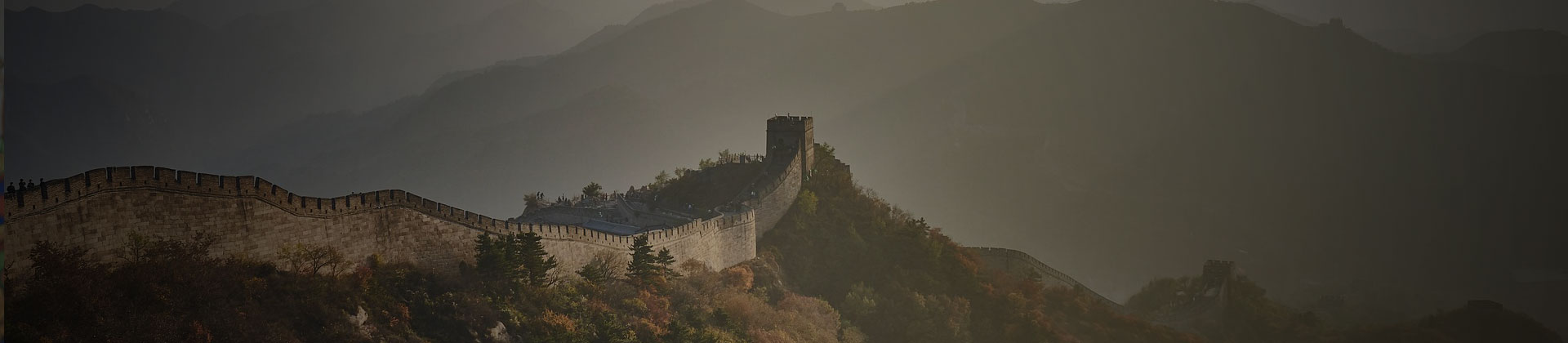
Heritage Grid | Jianmen Shudao: The Living Fossil of Global Overland Transport
The Sword Gate Shudao (Jianmen Shudao) is a living artery of Chinese civilization; it is not just a path, but a 2,300-year-old engineering marvel carved through the heart of impossible mountains, where every stone whispers tales of empire, poetry, and human tenacity.
Its story begins with an audacious royal deception. Around 316 BC, the ambitious King Huiwen of Qin (秦惠文王嬴驷) coveted the fertile Sichuan Basin, but the impenetrable Qinling and Daba mountain ranges stood guard. His solution? A cunning myth. He sent a message to the Shu king: the Qin possessed five stone bulls that excreted gold, and would gift them as a token of friendship.
Lured by greed, the Shu king ordered his strongest men—the Five Hercules (Wu Ding)—to hack a road through the cliffs to retrieve these mythical beasts. This road, later named the Stone Cattle Road (Jinniudao), became the backbone of the Shudao network. Soon after, Qin's armies marched down this very path, conquering Shu and unifying the region. Thus, the first lesson of Shudao was etched in stone: in China, roads are not just for travel, but the very tools of destiny.
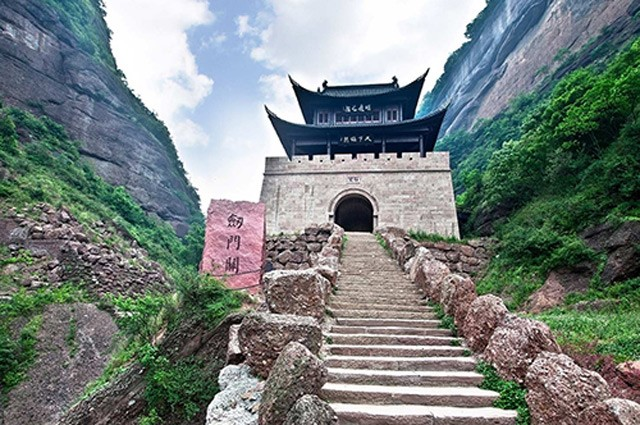
For two millennia, this corridor pulsed with history. The Three Kingdoms (220-280 AD): This was Shudao’s heroic age. The master strategist Zhuge Liang transformed a narrow pass into the legendary Sword Gate (Jianmen Guan), a defensive fortress of sheer cliffs. His successor, Jiang Wei, held this gate against overwhelming odds, making "one man can guard the pass, ten thousand cannot break through" a timeless symbol of resilience.
In a poignant reversal, the majestic Shudao became an escape route in the Tang Dynasty's Flight (756 AD): During the An Lushan Rebellion, Emperor Xuanzong fled south along its precarious planks. Yet, the same in the Tang dynasty, the road's sheer drama ignited the Chinese imagination. The great Tang poet Li Bai immortalized its peril in The Hard Roads of Shu: "Oh, but this is dangerous! How high! The road to Shu is harder than climbing to the blue sky!" His verses turned physical struggle into a cultural legend.
A Living Museum of Global Heritage
Today, Shudao is far more than a historical footnote; it is a tangible archive of human adaptation.
1. The World's First "Superhighway" System
More than a single path, it was a complex network of roads, passes, and support systems. The Plank Roads (Zhandao)—timber galleries bolted into cliff faces—showcase Bronze Age engineering genius. Facilities like horse-blocking walls (Lanma Qiang) for safety and relay stations made it the Silk Road's crucial southern lifeline, transporting tea, silk, and ideas for centuries.
2. An Ecological Time Capsule: The Green Cloud Corridor
Perhaps its most breathtaking feature is the Cuiyunlang (Green Cloud Corridor), a 30-kilometer avenue guarded by over 12,000 ancient cypress trees. Many were planted by officials starting in the Qin and Han dynasties, a living greening project for shade and road conservation. These majestic giants, some over 2,300 years old, form a natural cathedral and symbolize an ancient, unbroken covenant between humans and nature.
3. The Unbroken Thread: From Stone Paths to Steel Rails
Shudao's true spirit is its continuity. Its route dictated the path of progress: the 1950s Baocheng Railway, the modern G5 Beijing-Kunming Expressway, and even the Chengdu-Xi'an High-Speed Rail follow its ancient trajectory. This layering of history—from horse hoof prints on stone to bullet trains whistling past—makes it a unique "vertical museum" of transport evolution.
The Sword Gate Shudao is not merely a Chinese relic. It is a monument to universal human themes: the ambition that builds connections, the artistry born of struggle, and the perseverance that weaves history into a landscape. It reminds us that the most enduring wonders are not just what we build, but the stories we pave into the journey. To walk this path is to walk through the very soul of a civilization that has always believed no mountain is too high to cross.
Related articles
-
 Mount Qingcheng, the Taoist Immortal
More
-
The Tibetan and Qiang Culture: A Model of Multi-ethnic Integration in China
More
-
Ancient Shu Civilization: Sanxingdui and More Mysterious Ancient Civilizations
More
-
Heritage Grid | China's "Fifth Great Invention"? The Imprint of a Civilization Shaped by Examinations
More
-
Sichuan Cuisine: The Pinnacle of Spiciness in China
More
-
Discovering Three Kingdoms Culture: Key Historical Sites in Sichuan
More